Jul 21, 2026News & Insights
What Safety Features Matter Most to Buyers of AI Toys?
Importing connected smart toys has entered a highly scrutinized regulatory era. With European Union institutions recently finalizing the revised EU Toy Safety Regulation (TSR) (Regulation - 2025/2509, EUR-Lex), alongside UNICEF’s updated Guidance on AI and Children (Guidance on AI and children, by Unicef december 2025), B2B importers and overseas distributors face strict compliance barriers. The modernized regulations mandate that internet-connected toys must undergo safety assessments that explicitly evaluate cybersecurity, personal data protection, and risks to children's mental health or psychological development.
For sourcing managers, failing to meet these strict compliance standards or supplying toys with unstable hardware results in cargo seizures at customs, devastating recalls, and irreversible brand damage. Sourcing an AI companion toy requires a deep understanding of hardware-level data security and physical child-safety design.
The Root Cause: Why Traditional Smart Toys Fail Compliance and Safety Tests
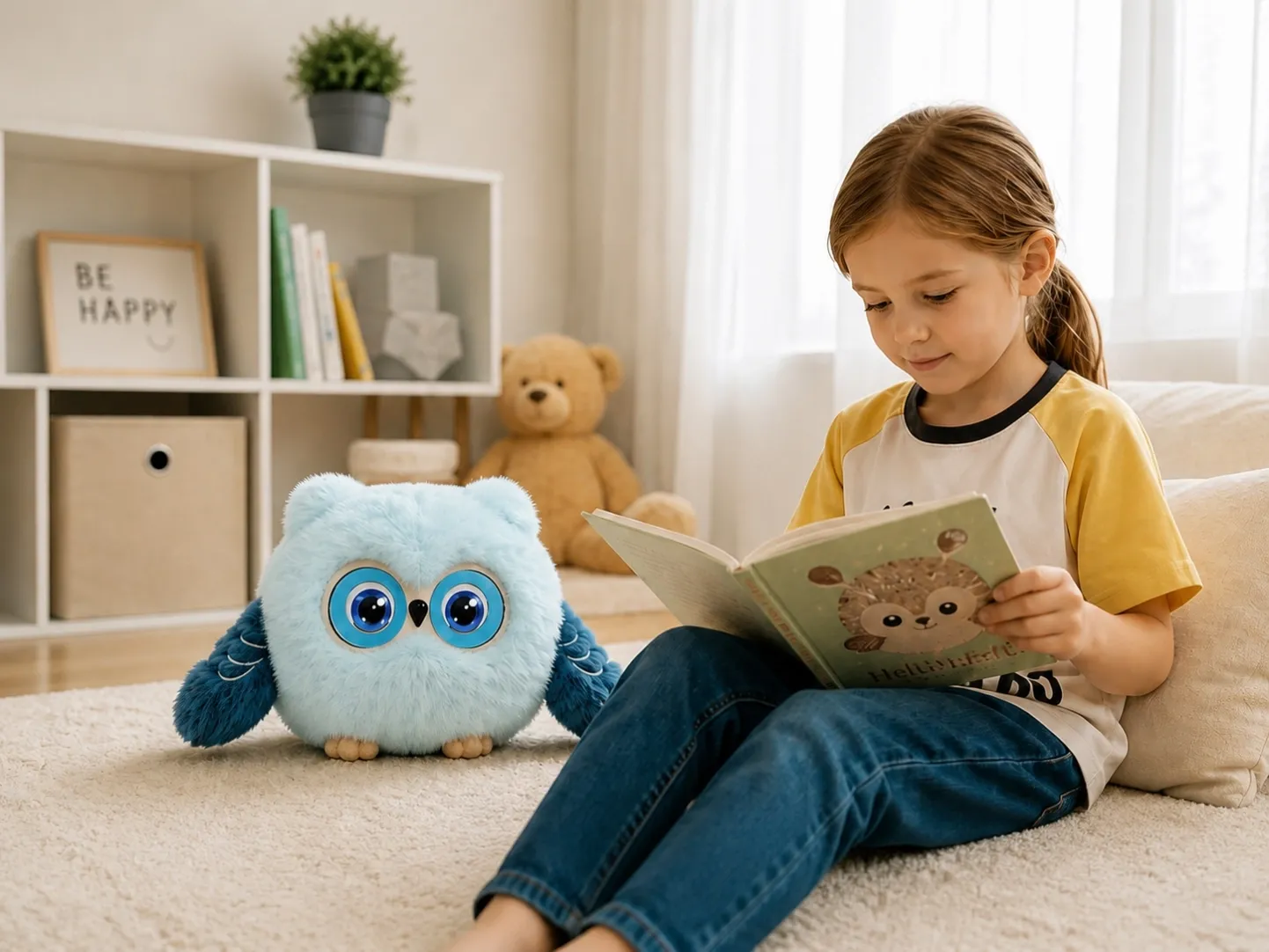
The persistent challenges in sourcing AI plush toys stem from a mismatch between general consumer IoT hardware and the strict emotional and data safety standards required for children. Traditional connected toys often fail due to three primary bottlenecks:
- Psychological Dependency and Attachment Risks: According to UNICEF’s latest policy brief on AI companions, children easily form deep parasocial relationships with interactive toys. Without proper guardrails, toys can foster unhealthy emotional dependencies or deliver psychologically inappropriate responses that violate child well-being standards.
- Data Privacy Violations: Many toys collect continuous ambient voice recordings or transcripts without transparent parental supervision, violating COPPA and EU data protection rules.
- Hardware and Signal Instability: Low-tier chipsets struggle with real-time AI processing, causing high battery drain, audio lag, and frequent system crashes. Furthermore, unshielded wireless modules operating on unstable bands compromise cybersecurity.
The Technical Solution: How the Tuya T5 ARM Architecture Solves Sourcing Pain Points
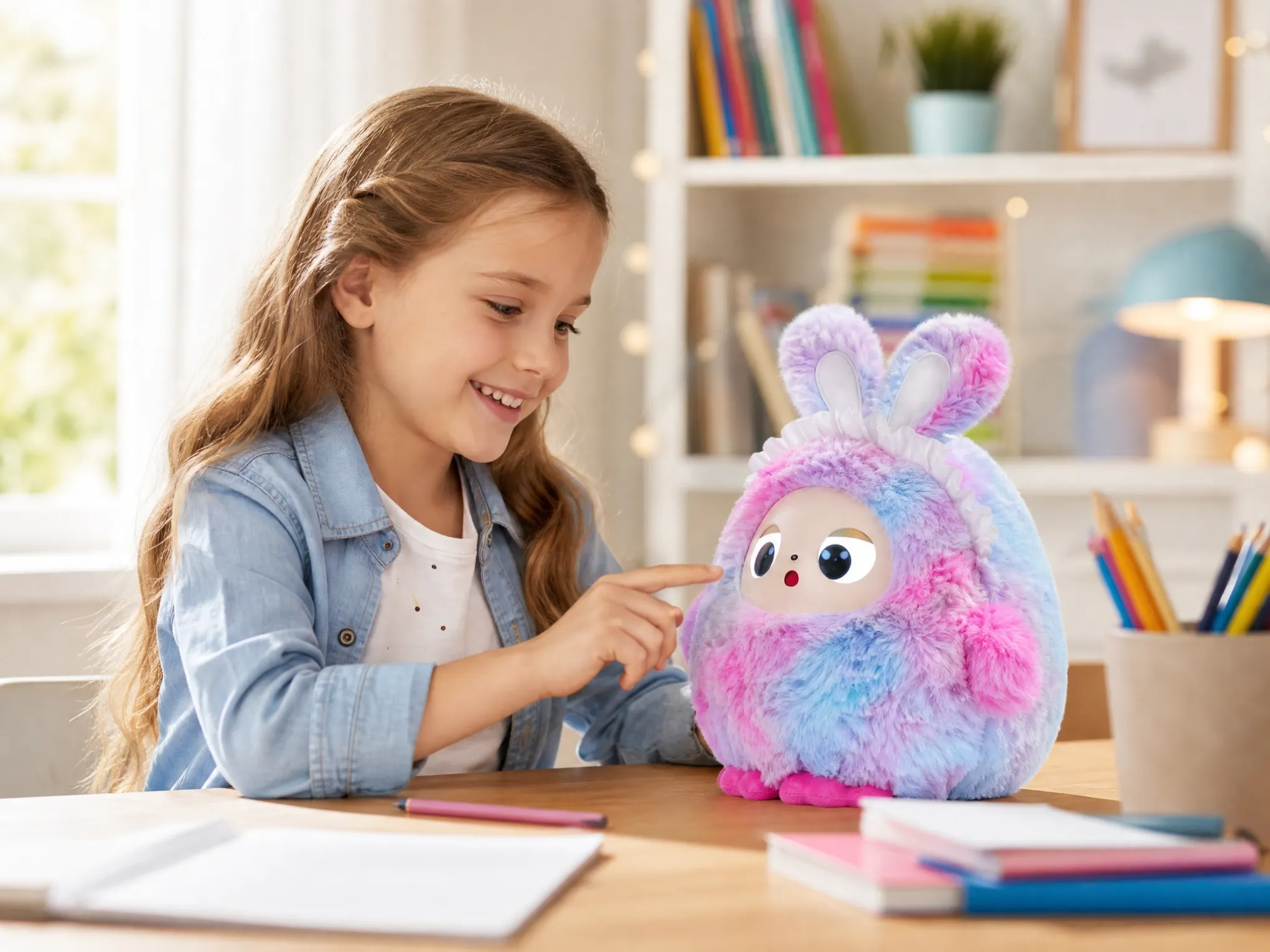
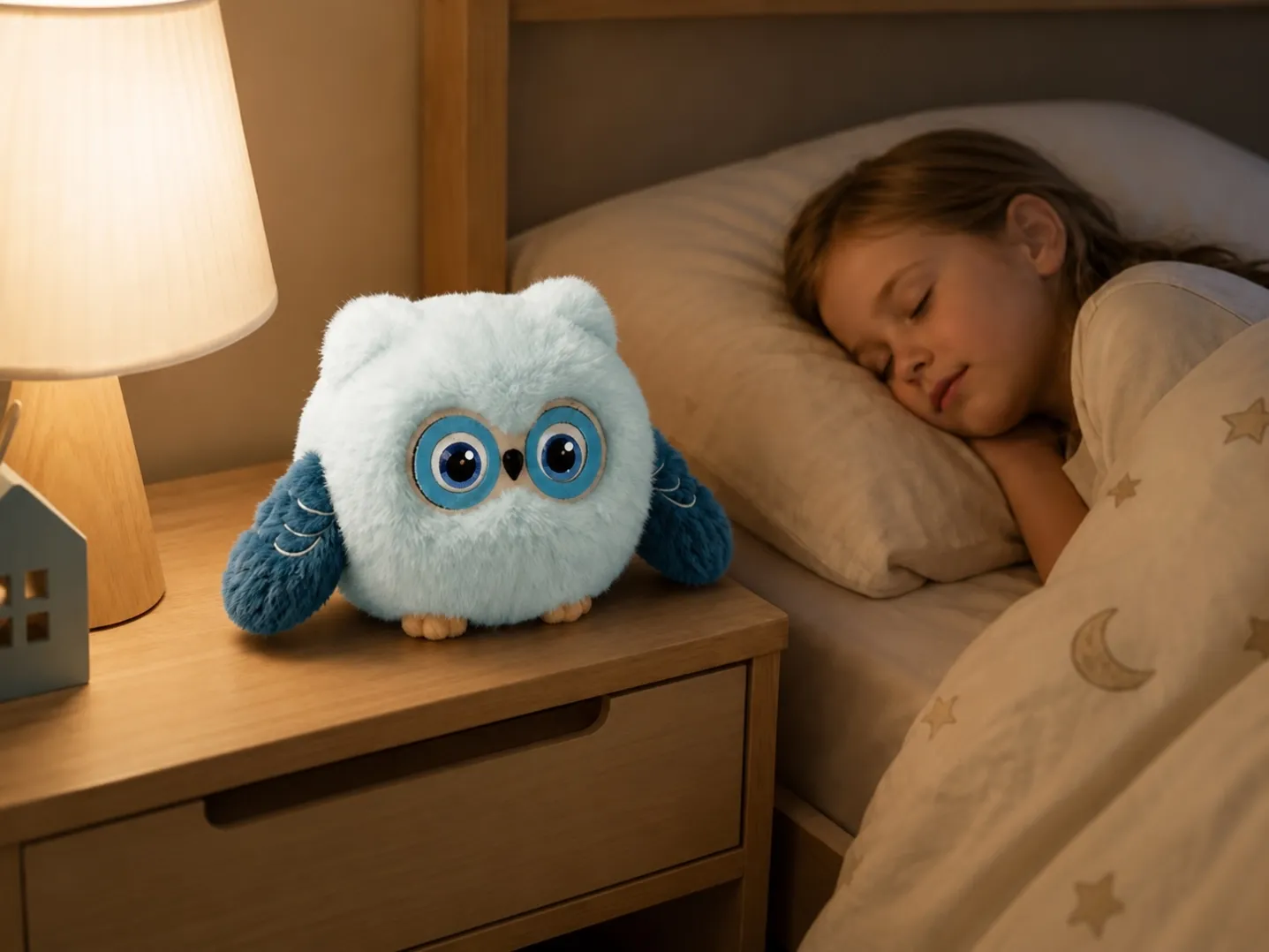
To meet these stringent global safety standards, modern B2B manufacturers have overhauled the hardware and software layers of AI plush toys, using advanced IoT modules to ensure safety, physical durability, and data compliance. For example: EMO-05.
- Tuya T5 ARM-Based IoT Platform: Powered by an ARM-architecture core, the Tuya T5 module operates stably on the 2.4~2.485GHz frequency band. It supports various UART serial communication protocols, ensuring secure, encrypted local data handling and preventing unauthorized wireless access.
- High-Capacity 1000mAh Battery & Lightweight Build: A high-density 1000mAh polymer battery provides up to 12 hours of continuous music playback and emotional companionship without the risk of overheating. At an overall product weight of just 338g, the plush toy remains lightweight and safe for young children, packaged with a safety lanyard, user manual, and Type-C charging cable.
- Interactive Companion and Parental Oversight: The AI system displays physical or digital expressions directly correlated with the user's emotions, backed by long-term memory and secure voice cloning. To comply with the EU’s mental health safety mandate, the toy automatically sends daily chat summaries and emotional mood logs to the parents' terminal, allowing caregivers to monitor their child’s psychological state.
- Secure OTA Upgrades: Firmware upgrades are handled via encrypted Over-the-Air (OTA) protocols, allowing distributors to deploy safety patches and content filter updates instantly as regulations evolve.
Buyer’s Playbook: Vetting Your AI Plush Toy Supplier
When auditing an OEM/ODM supplier for high-compliance AI companion toys, procurement managers should follow this technical verification process:
- Audit the Data Transmission and Parental Controls: Test the parental terminal interface. Ensure that chat summaries and mood logs are transmitted via secure, encrypted Tuya IoT cloud protocols, and verify that parents can delete data or mute the microphone at will.
- Perform Mechanical and Battery Safety Testing: Conduct high-low temperature cycling and drop tests on the 338g unit to ensure the 1000mAh battery compartment is securely locked and remains thermally stable under continuous AI processing.
- Evaluate the UART and OTA Firmware Capabilities: Confirm the UART serial communication protocols are closed to external tampering, and verify that the OTA framework can successfully push remote software updates without interrupting toy operations.
By enforcing these strict technical and regulatory benchmarks, sourcing teams can mitigate the risks of customs delays and post-sale returns, securing a reliable, high-margin product for the global market.
Looking for AI smart glasses for wholesale, retail, or private-label projects? Penease Tech supports OEM/ODM customization, packaging, branding, and product selection for different market channels. Contact us for product details or sourcing support.