News & Insights
AI Plush Toys vs. AI Robot Pets: Which Companion Fits Your Customers’ Needs?
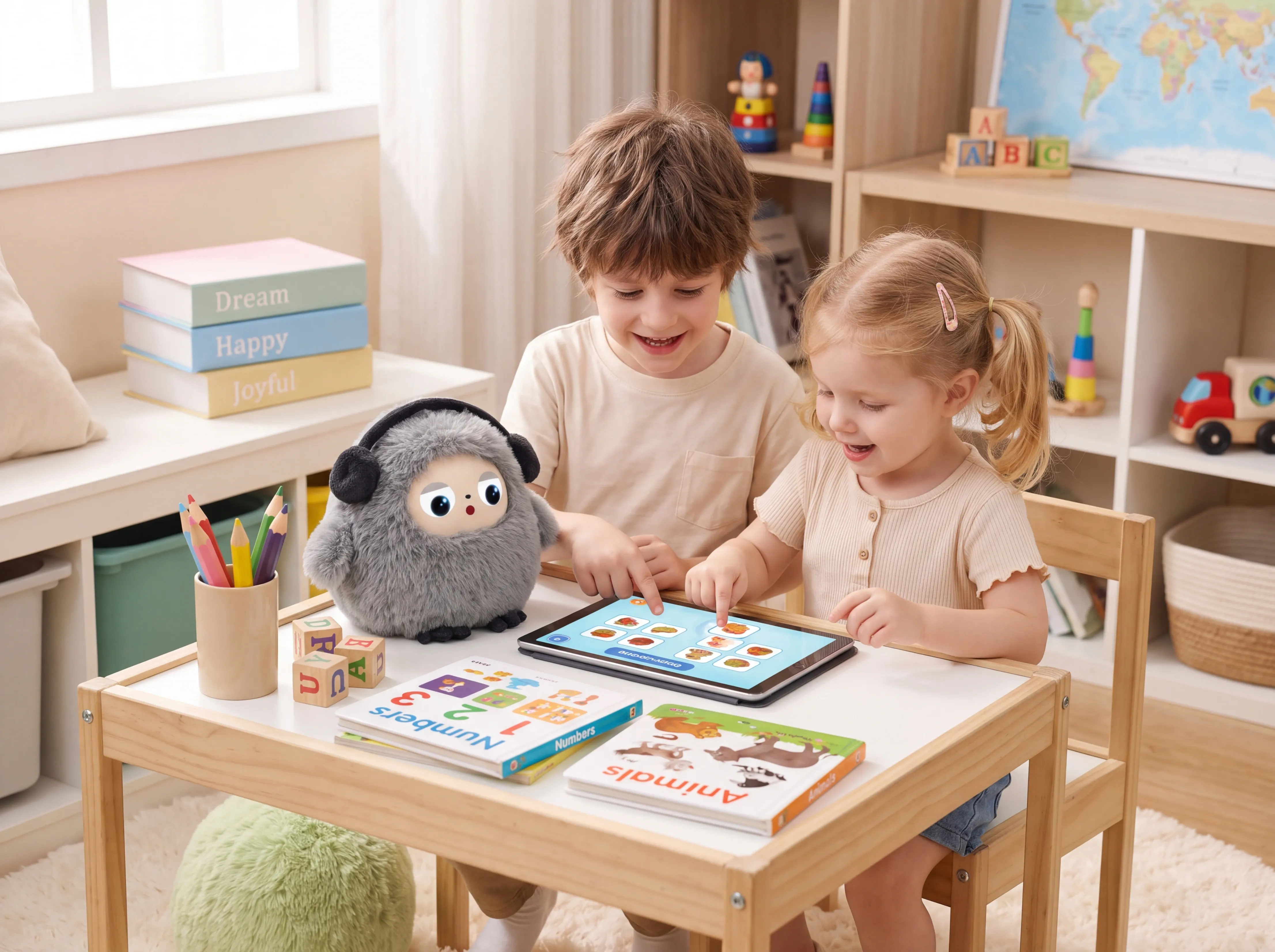
AI plush toys and AI robot pets can both offer voice interaction and digital companionship, but they serve different customer needs and retail markets.
An AI plush toy combines a soft, familiar design with interactive features, making it suitable for gifts and everyday companionship. An AI robot pet offers a more technology-focused experience through movement, sensors, lights, and other interactive functions.
Neither option is automatically better. The right choice depends on the target customer, retail channel, product capabilities, and intended price point.
For retailers and brand owners, understanding these differences is essential when selecting products for a competitive market.
Start with How Customers Will Use the Toy
Consider where customers are likely to use each product after purchase.
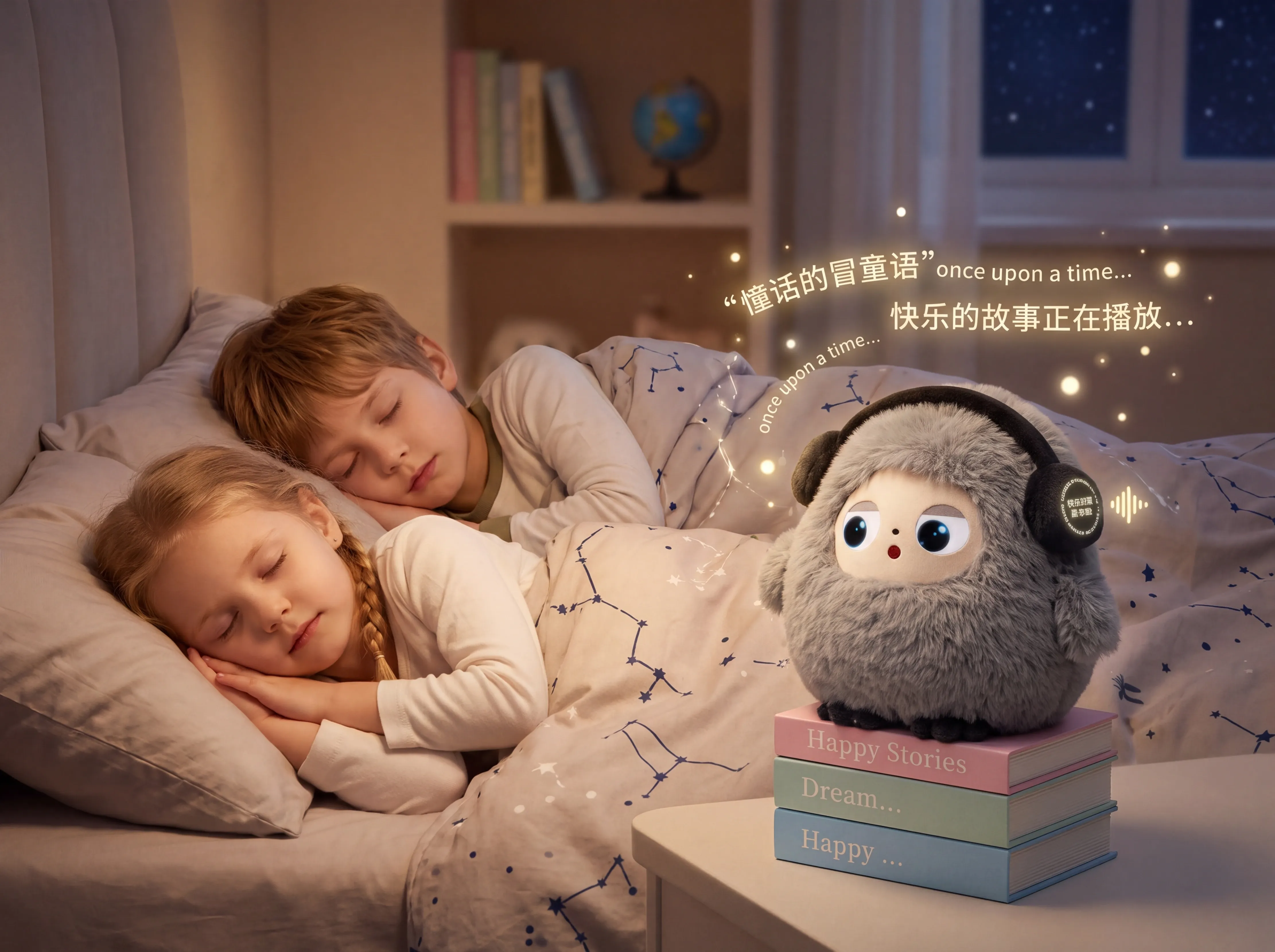
An AI plush toy fits naturally into bedrooms, play areas, and gift collections. Its soft exterior makes it approachable, while voice interaction adds functionality beyond that of a conventional stuffed toy. The internal electronics must be integrated without compromising comfort, appearance, or ease of handling.
Buyers should assess how the battery, speaker, microphone, and control system affect the finished product. For example, a plush toy using a Tuya T5 module and a 1,000mAh battery should be evaluated for size, weight, operating time, and interaction quality. These factors depend on the complete design and should be verified through sample testing rather than inferred from component specifications alone.
An AI robot pet offers a different experience. Movement, lighting, sensors, and voice interaction give users more ways to engage with the product. This format may suit consumer electronics retailers and gift stores targeting customers interested in interactive technology.
The TA-02 is one example. Its ABS and PC body incorporates dual stepper motors, four touch sensors, an infrared sensor, a gravity sensor, and a 2MP wide-angle camera. RGB lighting and an LCD face provide additional visual feedback, combining physical interaction with digital features.
However, these functions introduce additional evaluation requirements. Buyers should check movement responsiveness, control simplicity, sensor performance, and consistency during repeated use.
Hardware Design Determines What Buyers Need to Test
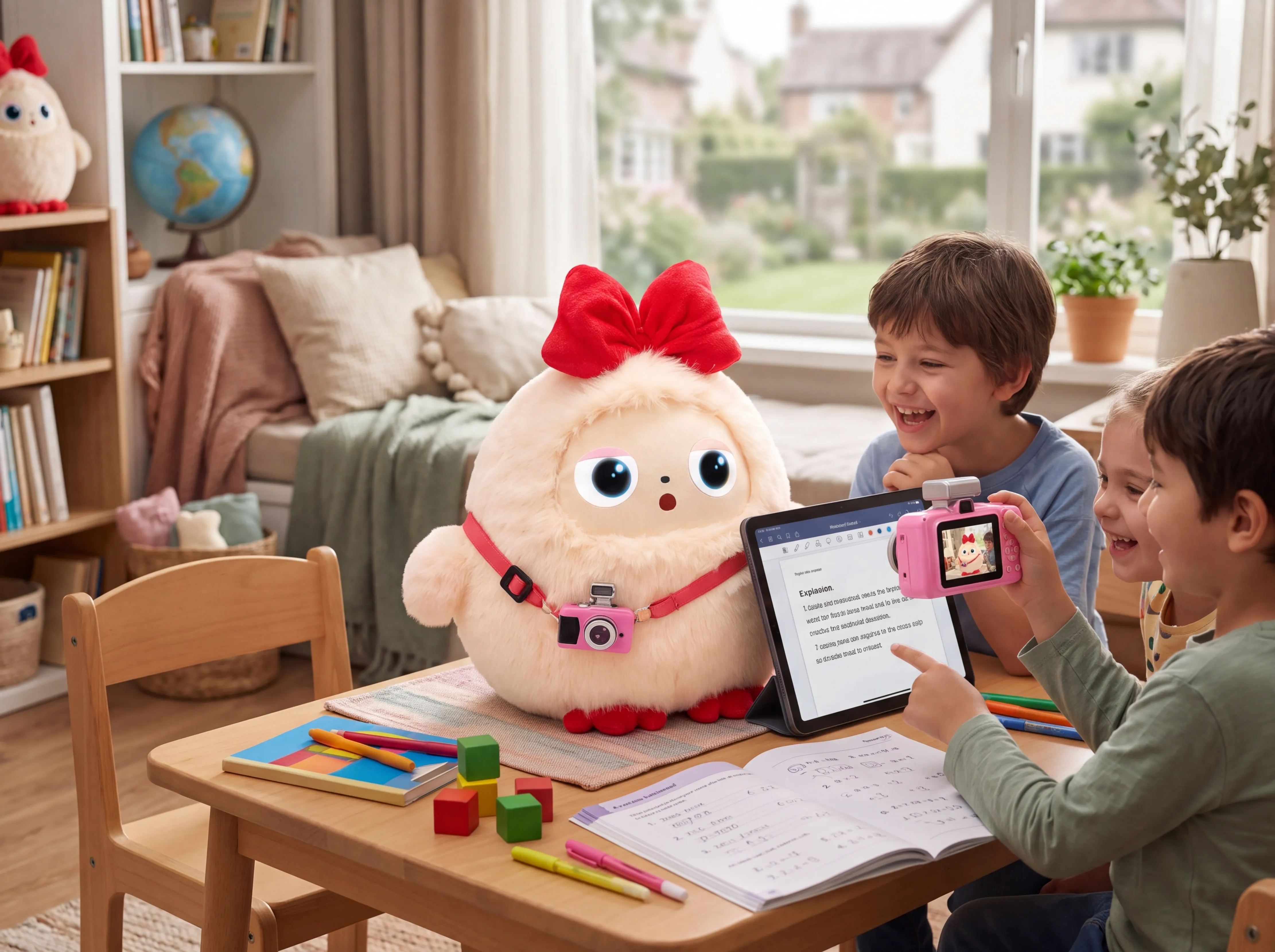
The difference between AI plush toys and AI robot pets extends beyond soft fabric versus a hard shell. Each design presents distinct engineering and quality - control requirements.
For an AI plush toy, buyers should assess the comfort and finish of the product. Is the electronics compartment noticeable when the toy is held? Are the seams secure? Is the speaker volume comfortable, and are voice responses clear? Does the toy remain easy to handle during normal use?
Battery performance also requires practical testing. Battery capacity alone does not determine operating time. Actual performance depends on power consumption, speaker usage, interaction frequency, and software behavior.
For an AI robot pet, buyers should test movement on appropriate surfaces, check motor noise, and evaluate responses to touch and voice commands. Camera performance and other sensor functions should also be verified against the supplier's specifications.
The TA-02 uses a 3,000mAh, 7.4V battery and supports USB-C charging. These specifications help buyers assess the product's hardware, but they do not establish its actual operating time. Battery life, charging performance, and power consumption during movement and interaction should be tested on a finished sample.
For both product categories, the finished product matters more than the component list alone. Problems with comfort, controls, responsiveness, or reliability can affect customer satisfaction and increase after-sales costs.
AI Features Must Serve a Clear Purpose
Adding AI does not automatically make a companion toy more appealing. Its features should provide a clear benefit to the intended customer.
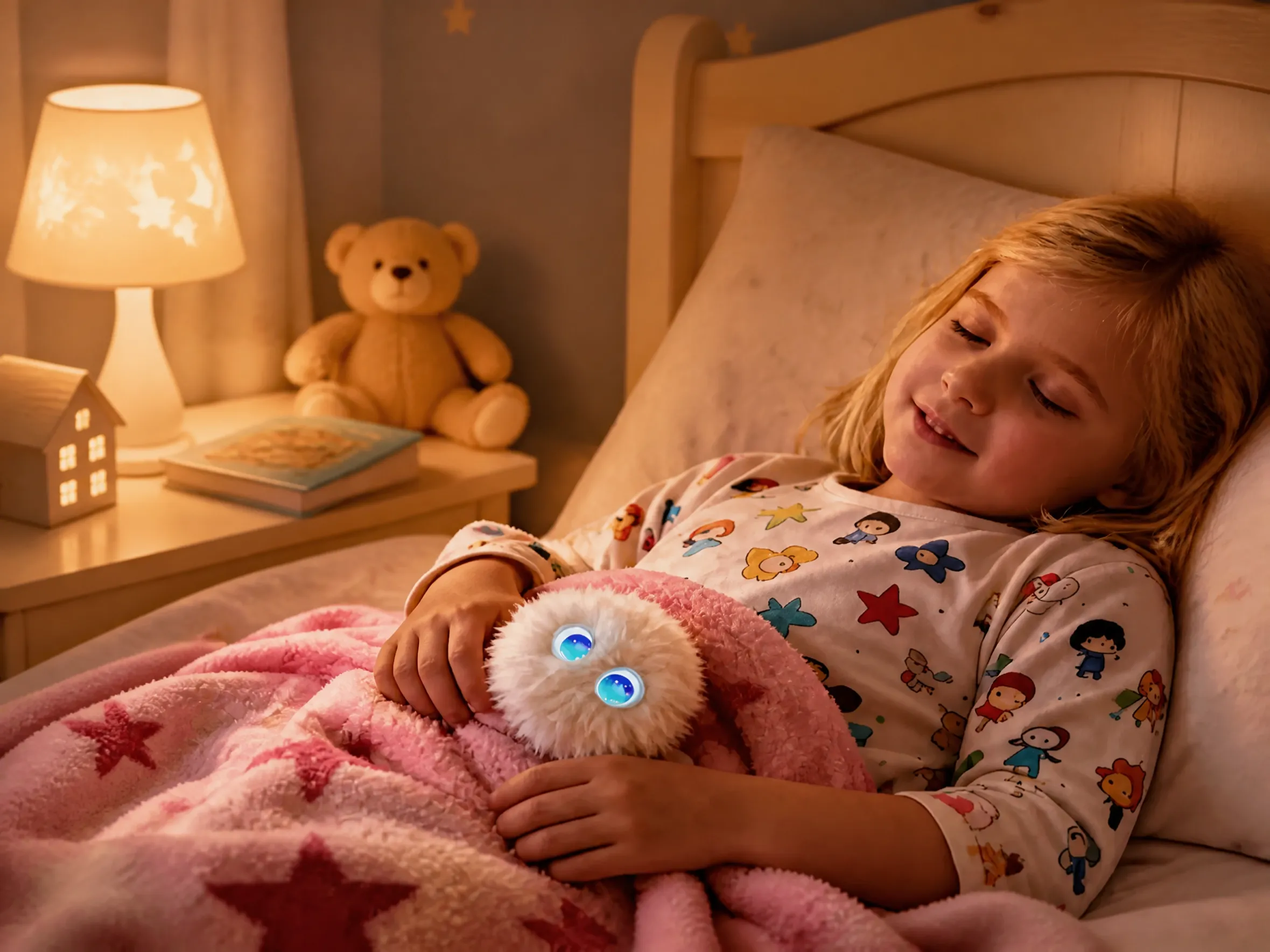
For an AI plush toy, conversation may be the main attraction. Buyers should evaluate response quality, supported languages, handling of unclear questions, and internet connectivity requirements. For products intended for children, data privacy, age-appropriate interaction, and parental controls also require careful review.
For an AI robot pet, AI can complement physical interaction. The TA-02 combines voice interaction with a camera and multiple sensors. According to the supplied product information, its platform supports ChatGPT for global markets and DeepSeek or Qwen for China-focused markets.
This flexibility may help brands plan products for different regional markets. However, buyers should confirm which models and functions are available in each market, whether they require an internet connection or an accompanying app, and whether third - party services involve ongoing fees.
These details are particularly important for OEM and ODM projects. A feature demonstrated by a supplier may depend on specific software, an online service, an app, or local network conditions. Buyers should verify these dependencies before finalizing product specifications, marketing claims, or launch plans.
Match the Product to the Sales Channel
The product format also influences how it should be marketed and sold.
An AI plush toy may be easier to position as a gift because its appearance and character design communicate much of its appeal. Fabric quality, packaging, character development, and the interaction experience can all influence purchasing decisions. Retailers should assess whether the product suits their target customers rather than relying on AI features alone.
An AI robot pet may benefit more from an in - store or video demonstration. Customers may want to see its movement, touch responses, and camera-related functions before deciding whether the product offers sufficient value. Retailers should consider whether they have the space and product knowledge needed to demonstrate these features effectively.
There is no fixed price difference between the two categories. Retail pricing depends on the design, bill of materials, order quantity, customization requirements, shipping costs, and target market. Buyers should compare supplier quotations based on the actual specifications and intended retail positioning rather than assuming that every robot pet belongs to a higher price tier.
Compliance should also be considered early in the sourcing process. Requirements depend on the destination market, intended age group, and product design. In the United States, for example, the Consumer Product Safety Commission (CPSC) provides guidance on applicable toy safety requirements, including ASTM F963. Battery-powered products, moving mechanisms, materials, and age grading may affect the testing and documentation required.
Buyers should confirm the applicable requirements for their specific product and market before placing an order.
Choose for the Customer, Not the Feature List
AI plush toys and AI robot pets can both strengthen a companion-product range, but they should not be treated as interchangeable products.
An AI plush toy may be the better fit when softness, character design, gift appeal, and conversation are central to the intended experience. An AI robot pet may be more suitable for customers who value movement, sensor-based interaction, and a technology-focused design.
Before committing to an order, buyers should evaluate product samples, verify the functions available in their target market, and review relevant safety and compliance documentation. For customized products, they should also confirm available design changes, minimum order quantities, development costs, and the scope of ongoing software support.
The strongest product is not necessarily the one with the most sensors or the longest list of AI features. It is the one that delivers a reliable experience, meets customer expectations, and aligns with the brand's commercial goals.