News & Insights
From Character Idea to Retail-Ready Product: How to Build a Private-Label AI Plush Companion
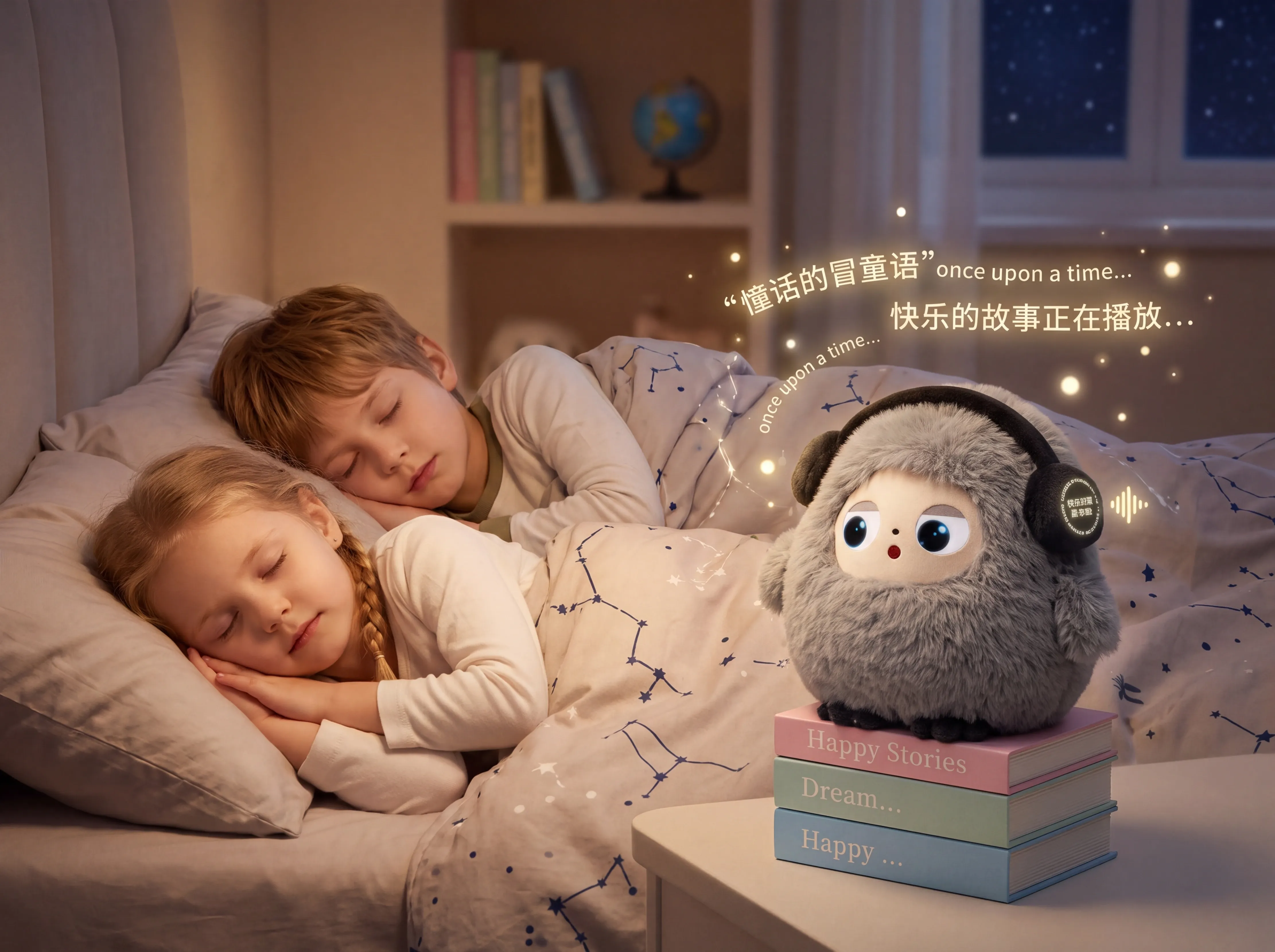
A character may look perfect on screen but prove difficult to reproduce as a plush toy. Embroidered features can lose their expression, stuffing can change the character's proportions, and the space required for electronics can affect the original design.
For IP owners, game studios, and toy brands, these challenges are easier to address before production begins. Developing a private-label AI plush companion involves more than adding a speaker and microphone to a stuffed toy. The character design, materials, internal structure, hardware, and interactive features must work together.
Begin with the Character, Not the Electronics
The first prototype is often where a character design meets the practical limits of plush manufacturing.
A drawing can be adjusted freely on screen, but fabric behaves differently. A large head may require internal support to retain its shape, while small facial details can be difficult to reproduce through embroidery. Fabric texture, stretch, pile direction, and lighting can also affect the character's appearance.
Before material selection begins, brands should provide the manufacturer with clear reference artwork. Front, side, and back views are useful, along with close-ups of distinctive features such as the eyes, mouth, clothing, and accessories. These references help manufacturers identify which details must remain consistent and which can be simplified for production.
Material selection should reflect the character's design. Short-pile fabric may suit characters with fine embroidered details, while longer-pile fabric may better match a fluffy appearance. Color samples should be compared with the original artwork because colors can look different across materials.
For characters with unusual proportions or complex details, reviewing multiple prototypes can help identify problems early. Adjustments are generally easier to manage before the pattern and production process are finalized.
Integrate the Hardware During Sampling
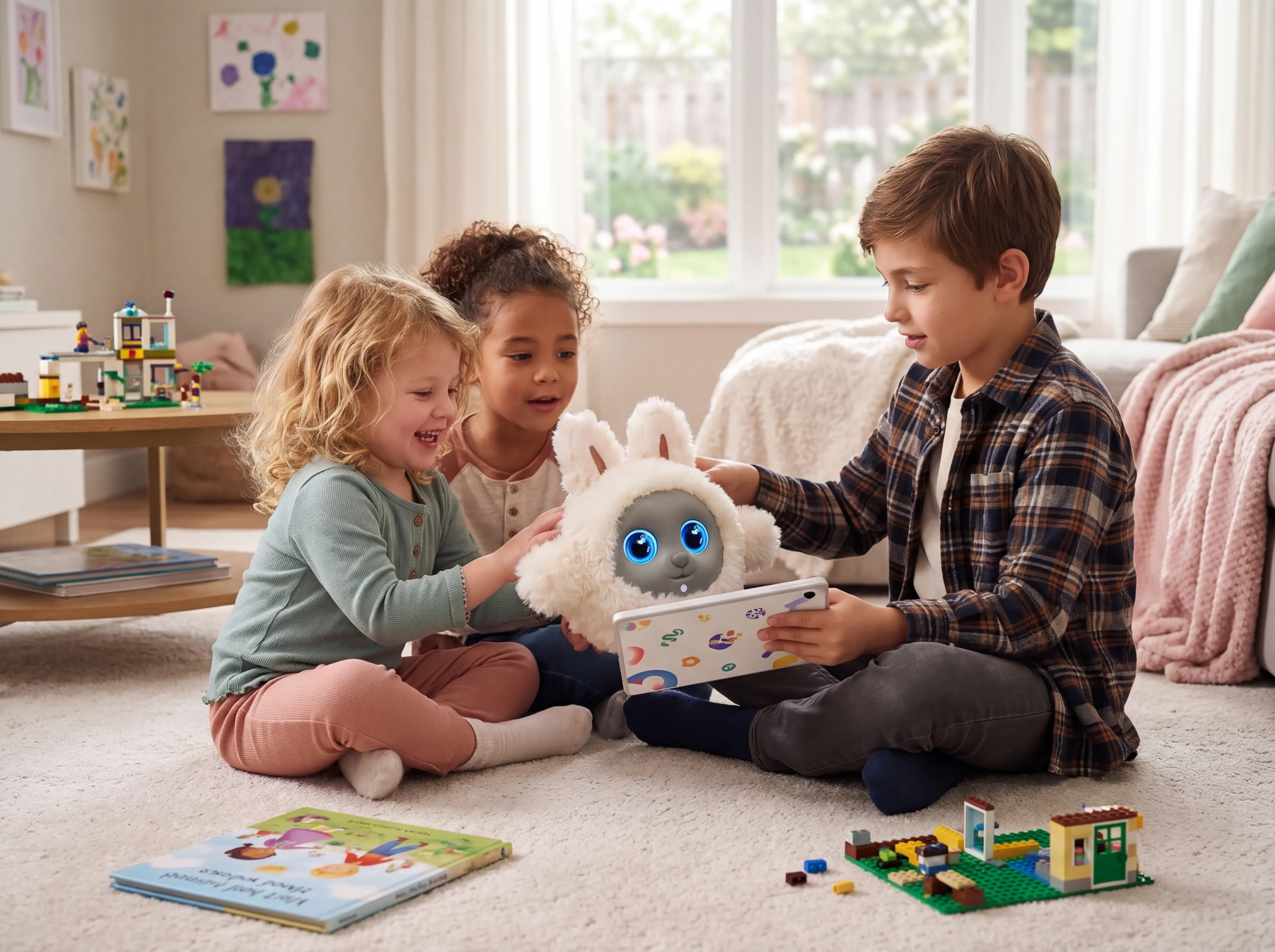
Unlike a conventional stuffed toy, an AI plush companion must accommodate electronic components inside its body.
The battery, circuit board, microphone, speaker, and other components need secure positions without making the toy uncomfortable to hold. If the electronics are added only after the outer shell has been finalized, they may compress the stuffing, distort the silhouette, or create hard spots beneath the fabric.
Brands should discuss the intended hardware platform with the plush manufacturer before approving the pattern. Depending on the design, the toy may require an internal pocket, reinforced mounting points, or a dedicated compartment that allows the electronics to be accessed for inspection or replacement.
Sound quality should also be evaluated early. Thick stuffing and dense fabric may affect microphone performance and speaker output. The best component placement depends on the toy's shape and hardware configuration, so it should be tested on a working sample rather than determined from drawings alone.
Battery capacity is another design consideration. A larger battery may provide longer operating time, but it also occupies more space and adds weight. The finished toy must balance battery performance with comfort, appearance, and safe construction.
Define the AI Experience Before Development
Before software development begins, brands should establish what they want the toy to do and how customers will interact with it.
Some characters may need basic voice conversations and predefined responses. Others may require multilingual interaction, personalized dialogue, or more sophisticated character-specific behavior. Each additional function can affect development costs, testing, connectivity requirements, and ongoing support.
The character's personality should be defined alongside its functionality. A playful game character may need a different tone and vocabulary from a gentle bedtime companion. Developers can use system instructions and content rules to guide responses, but these controls require testing. A character prompt alone cannot guarantee that every response will be appropriate or consistent.
The hardware platform is equally important. Using an existing module may reduce the need to develop an electronic system from scratch, but integrating it into a plush toy still requires engineering and testing. Buyers should confirm supported voice functions, available languages, internet connectivity requirements, and software update options.
Brands should also establish what happens when the internet connection fails or an AI service becomes unavailable. If the toy depends on cloud connectivity for its primary functions, that limitation should be reflected in the product instructions and marketing claims.
Make Privacy and Safety Part of Development
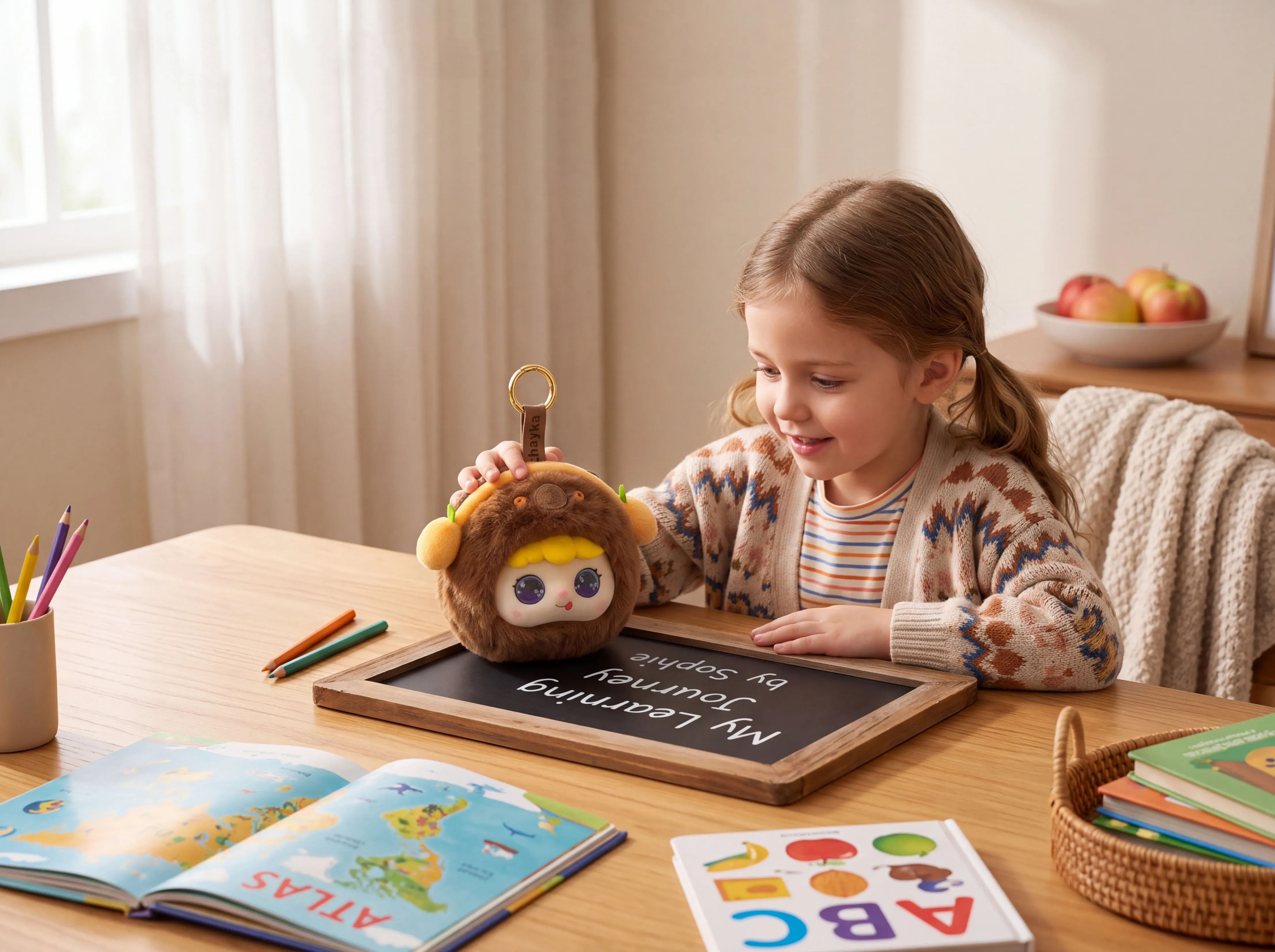
When an AI plush companion is designed for children, privacy and safety should be considered from the beginning rather than added just before launch.
Start by identifying what information the product collects and how it is processed. Does it handle voice input locally or send it to a cloud service? Are audio recordings or conversation histories retained? Who can access stored information, and how can parents manage or delete it?
For products covered by the US Children's Online Privacy Protection Act (COPPA), applicable requirements may include parental notice and verifiable parental consent before certain personal information is collected from children under 13. The Federal Trade Commission identifies audio recordings containing a child's voice as personal information, subject to specific conditions and exceptions. Requirements depend on how the toy, app, and associated online services operate. Brands should review the official [FTC COPPA guidance](Complying with COPPA: FTC guidance) before finalizing their data practices.
For the European Union, Regulation (EU) 2025/2509 establishes a new toy safety framework. It generally applies from 1 August 2030, although certain provisions apply from 1 January 2026. Brands preparing products for the EU market should review the [official regulation and its transitional provisions](EU Toy Safety Regulation 2025/2509) and determine which requirements apply to their products and launch dates.
Physical safety requires the same attention. Fabric, seams, small components, battery access, charging, and the behavior of the finished toy should all be evaluated. Lithium batteries shipped separately or installed in products must also meet applicable transport requirements, including UN 38.3 testing where required. Component-level documents alone do not establish that the completed toy complies with every applicable requirement.
Move from Prototype to Production in Stages
Development timelines depend on the character's complexity, hardware platform, software requirements, customization, and testing needs. A simpler design using an established module may follow a different process from a fully customized product.