News & Insights
Toy + AI vs. AI-Native Hardware: Which Product Roadmap Fits Your Market?
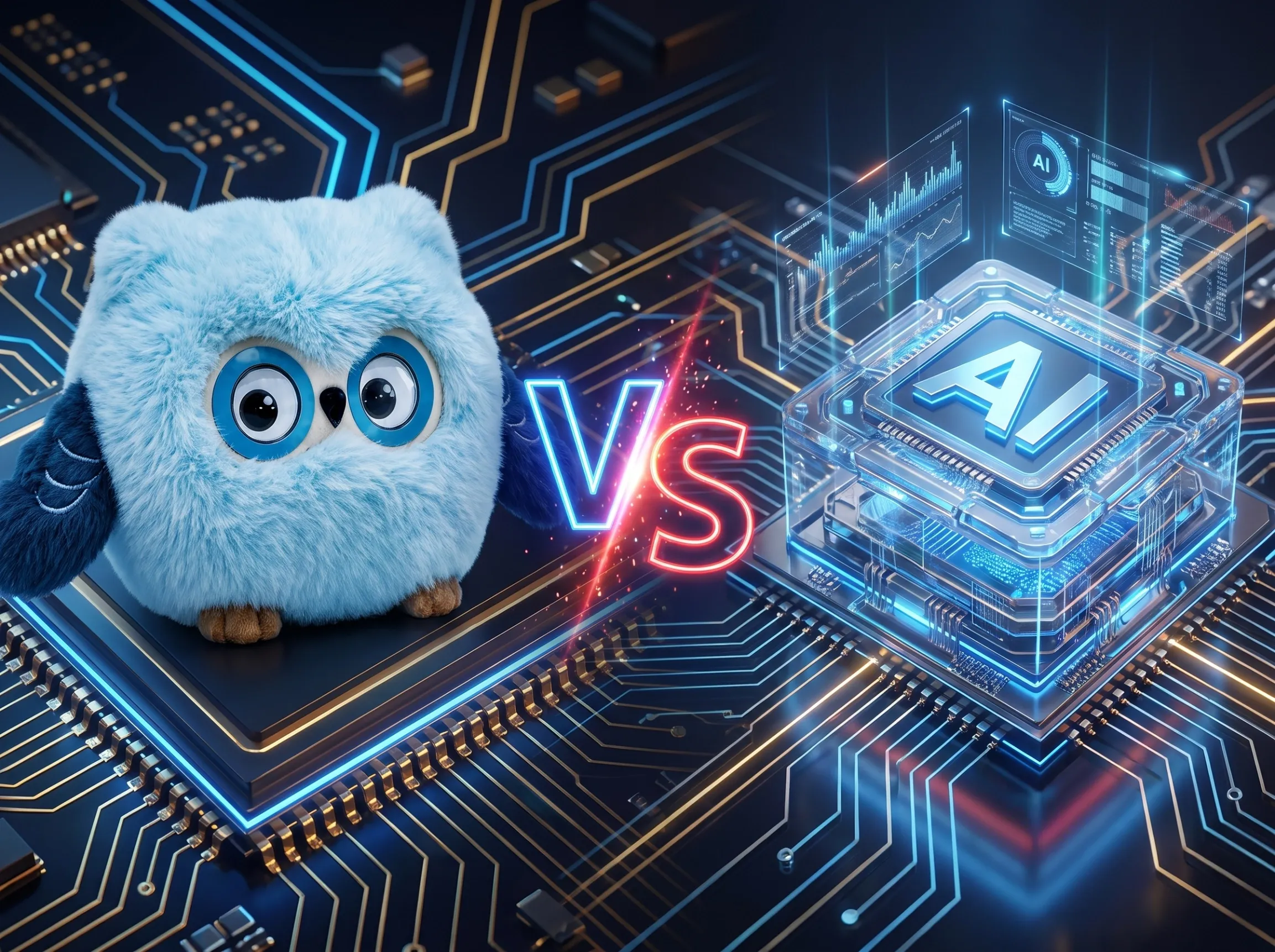
Global importers, retail distributors, and toy brand owners are increasingly exploring ways to integrate artificial intelligence into their product portfolios. However, adding AI to an existing toy and developing a product around AI from the beginning can lead to very different sourcing requirements.
This distinction affects more than the feature list. It can influence the hardware architecture, bill of materials (BOM), product development process, testing requirements, product positioning, and retail strategy. Establishing a clear AI toy product strategy therefore starts with understanding which development approach better matches the target market and existing product portfolio.
Roadmap 1: "Toy + AI" — Adding Intelligence to an Existing Play Experience
Market Definition
In a "Toy + AI" approach, the physical toy remains the primary product, while AI is introduced as an additional interactive capability.
The product may still be designed around familiar toy categories such as plush characters, dolls, or figures. The purchasing decision can therefore continue to depend on factors such as character design, tactile appeal, product appearance, price positioning, and the intended age group.
AI can then add functions such as voice interaction, storytelling, question answering, or other forms of interactive play.
This approach can be particularly relevant for brands that already understand traditional toy development and want to introduce AI without completely redesigning their product category.
B2B Sourcing Strategy
For B2B buyers, this roadmap can allow the physical design and manufacturing process to remain relatively close to an existing toy development workflow.
Depending on the product, suppliers may integrate an AI-enabled electronic module, microphone, speaker, battery, wireless connectivity, and related control components into an existing plush or toy structure.
This means sourcing teams can evaluate both sides of the product independently: the physical toy experience and the AI interaction experience.
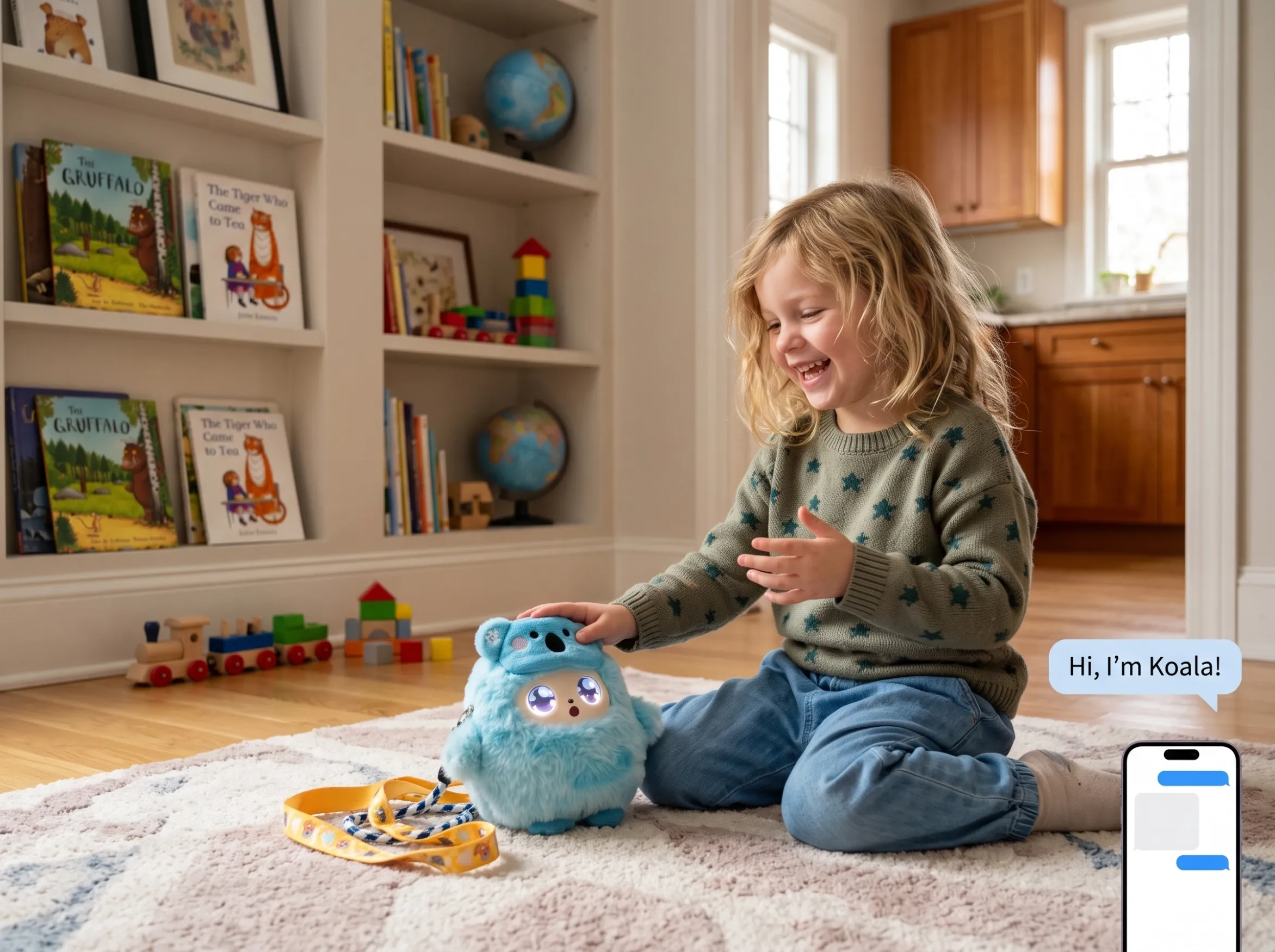
For example, a plush toy can retain its existing character design and tactile qualities while adding voice-based interaction. In this model, AI functionality enhances the original toy rather than completely redefining the product category.
For importers and distributors, this can also make it easier to position the product through existing toy-oriented sales channels.
Roadmap 2: "AI-Native Hardware" — Designing the Physical Product Around AI Interaction
Market Definition
"AI-Native Hardware" can be used as a product development framework for devices in which AI interaction is considered from the beginning rather than added to an existing toy design.
The physical form may still be a plush character, tabletop companion, or another consumer-friendly object. The difference is that the hardware architecture, interaction methods, and product experience are designed around ongoing interaction with the AI system.
Instead of treating AI as one additional feature, product teams may need to consider how microphones, speakers, connectivity, processing hardware, power management, software updates, and physical interaction work together as a complete system.
This does not automatically make the product more advanced or commercially successful. It simply represents a different development path with different sourcing requirements.
B2B Sourcing Strategy
Moving toward AI-native companion hardware requires procurement teams to pay closer attention to the underlying electronics and their integration with the physical product.
For example, an AI toy platform using the Tuya T5 module and ARM architecture may provide the electronic foundation for interactive functions. The product configuration can also include a 1000mAh battery, UART and other serial communication interfaces, and OTA firmware update capability.
These components should not be viewed independently. Buyers need to evaluate how the electronic architecture fits within the product's physical design, power requirements, connectivity, software update process, and intended interaction model.
For an AI-native product, supplier evaluation should therefore go beyond traditional toy manufacturing capabilities. Buyers may also need to assess the supplier's experience with embedded electronics, firmware development, wireless connectivity, AI-related software integration, and long-term product maintenance.
Comparing the Two Product Roadmaps
The distinction between these approaches is not simply whether a product contains AI. Both can incorporate AI capabilities. The more important question is where AI sits within the overall product strategy.
With Toy + AI, the physical toy remains the foundation, and AI enhances the existing experience.
With an AI-native approach, AI interaction becomes a central consideration when defining the hardware architecture and user experience from the beginning.
This difference can affect several sourcing decisions:
Hardware Architecture: Toy + AI may allow AI-related electronics to be integrated into an existing product structure, while AI-native development may require hardware to be designed around the interaction model from the start.
Product Development: Existing toy designs may be easier to adapt when AI functions are relatively limited. More complex AI interaction can require closer cooperation between industrial design, hardware, firmware, and software teams.
Supplier Capabilities: Traditional toy manufacturing experience may be sufficient for some Toy + AI products, while AI-native projects may require suppliers with stronger embedded electronics and software capabilities.
Product Lifecycle: Buyers should determine whether AI functions are fixed at launch or whether the product is expected to receive firmware or software updates after production.
Market Positioning: A product built around a familiar toy category may fit naturally into an existing toy portfolio, while a more technology-focused companion product may require different positioning, retail channels, or customer education.
Sourcing Playbook: How Sourcing Teams Decide Which Path to Take
Neither roadmap is automatically the right choice. The appropriate approach depends on the product concept, target customer, existing manufacturing capabilities, and expected level of AI interaction.
Consider "Toy + AI" When:
The primary value of the product remains its physical character, play pattern, or established toy category, with AI serving as an additional interactive feature. Buyers can prioritize appearance, materials, tactile experience, AI interaction quality, and cost-effective trial production.
Consider an AI-Native Approach When:
AI interaction is central to the product concept and needs to influence the hardware architecture from the beginning. Buyers should place greater emphasis on embedded electronics, connectivity, firmware, OTA capability, power management, and cooperation between hardware and software teams.
Use a Phased Development Strategy:
When market demand is still uncertain, starting with an existing product platform can reduce development complexity. After collecting customer feedback and evaluating commercial performance, brands can determine whether deeper hardware and software customization is justified.
The distinction between Toy + AI and AI-native hardware ultimately comes down to where AI sits within the product architecture and commercial proposition.
For B2B buyers, the decision should therefore begin with the intended user experience and work backward to the required hardware, software, supplier capabilities, and production model. Whether AI is added to an established toy format or becomes the foundation of a new companion product, a clear product roadmap can help sourcing teams make more informed decisions about development scope and manufacturing requirements.