Sep 7, 2026News & Insights
Smart Hardware Ingress Protection: Why IP Ratings Matter for Outdoor Sourcing
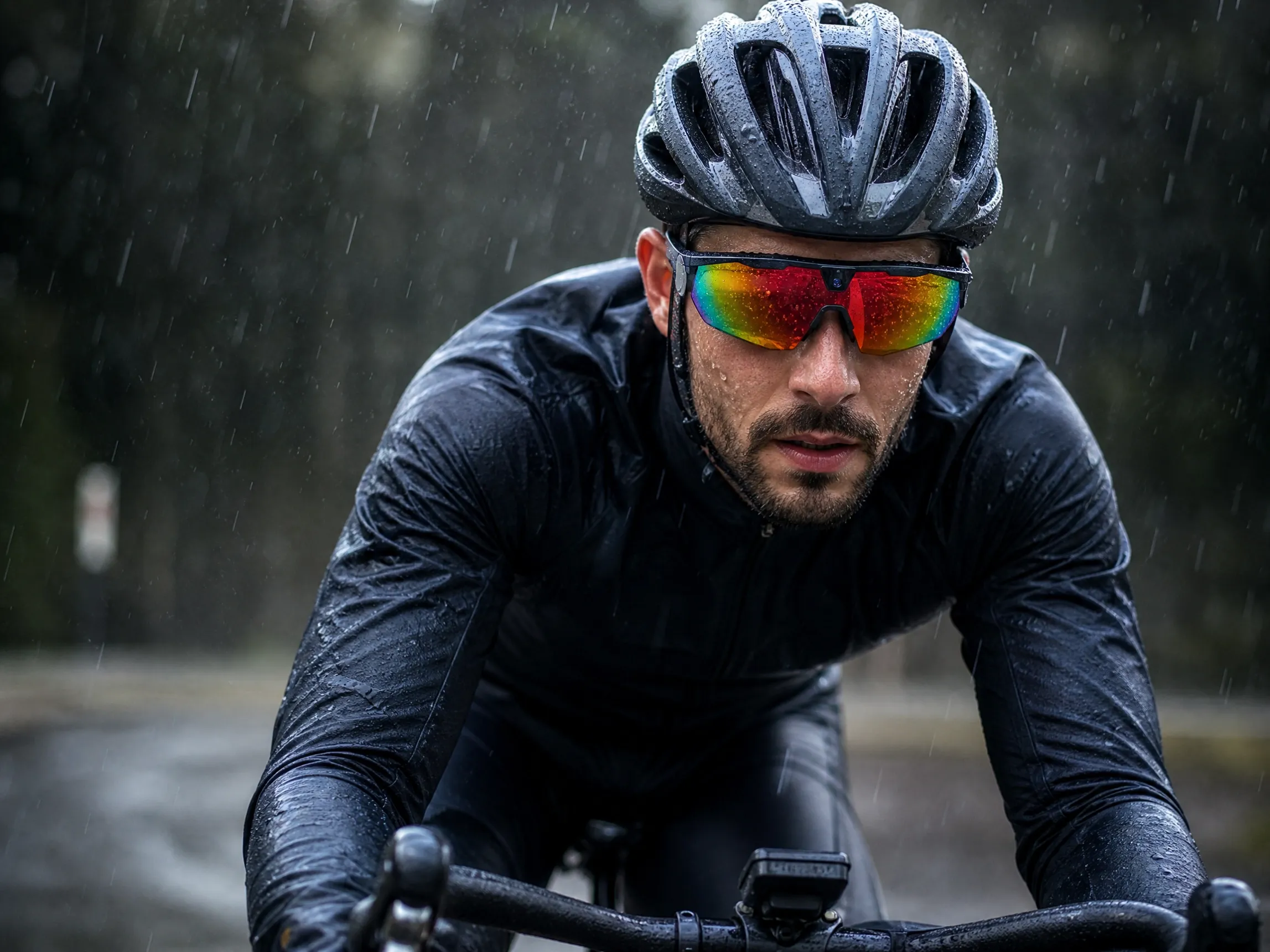
When sourcing smart hardware for outdoor use, it is easy to focus on AI functions, connectivity, and battery life while overlooking how well the hardware itself is protected from its environment. Sweat, rain, dust, and humidity can all affect electronic components, particularly when moisture reaches sensitive internal parts.
For wearable devices, ingress protection is therefore an important part of product evaluation. An IP rating does not guarantee that a product will withstand every outdoor condition, but it provides a standardized way to understand its resistance to dust and water IEC 60529 – Degrees of protection provided by enclosures (IP Code). For B2B sourcing, the key is to understand what the rating actually means and verify that the tested product matches the product being ordered.
Understanding IP Ratings: What Do the Numbers Actually Mean?
Technical Standard
IEC 60529 defines the IP Code used to classify the degree of protection provided by enclosures against the intrusion of solid foreign objects and water. IEC 60529 – Degrees of protection provided by enclosures (IP Code) The first digit indicates protection against solid foreign objects and dust, while the second digit indicates protection against water under specified test conditions.
For example, an IP54 rating indicates dust-protected performance and protection against water splashes from different directions under specified test conditions. IP66 provides a higher level of protection: the first “6” indicates a dust-tight enclosure, while the second “6” indicates protection against powerful water jets.
It is important to distinguish IP66 from waterproofing in the general sense. IP66 does not mean that a device can be submerged. Immersion requires a different water-ingress rating and corresponding test method.
Engineering Considerations
An IP rating should be treated as a defined test result rather than a general promise of outdoor durability.
Real-world conditions can also be more complicated than standardized water-ingress tests. Sweat, for example, contains salts and other substances that may introduce corrosion-related considerations beyond the scope of an IP rating. Long-term resistance to sweat or other corrosive exposure therefore requires additional evaluation.
For active outdoor applications, IP protection can provide a useful baseline against dust and water ingress, but additional material selection, sealing design, and durability testing may also be relevant.
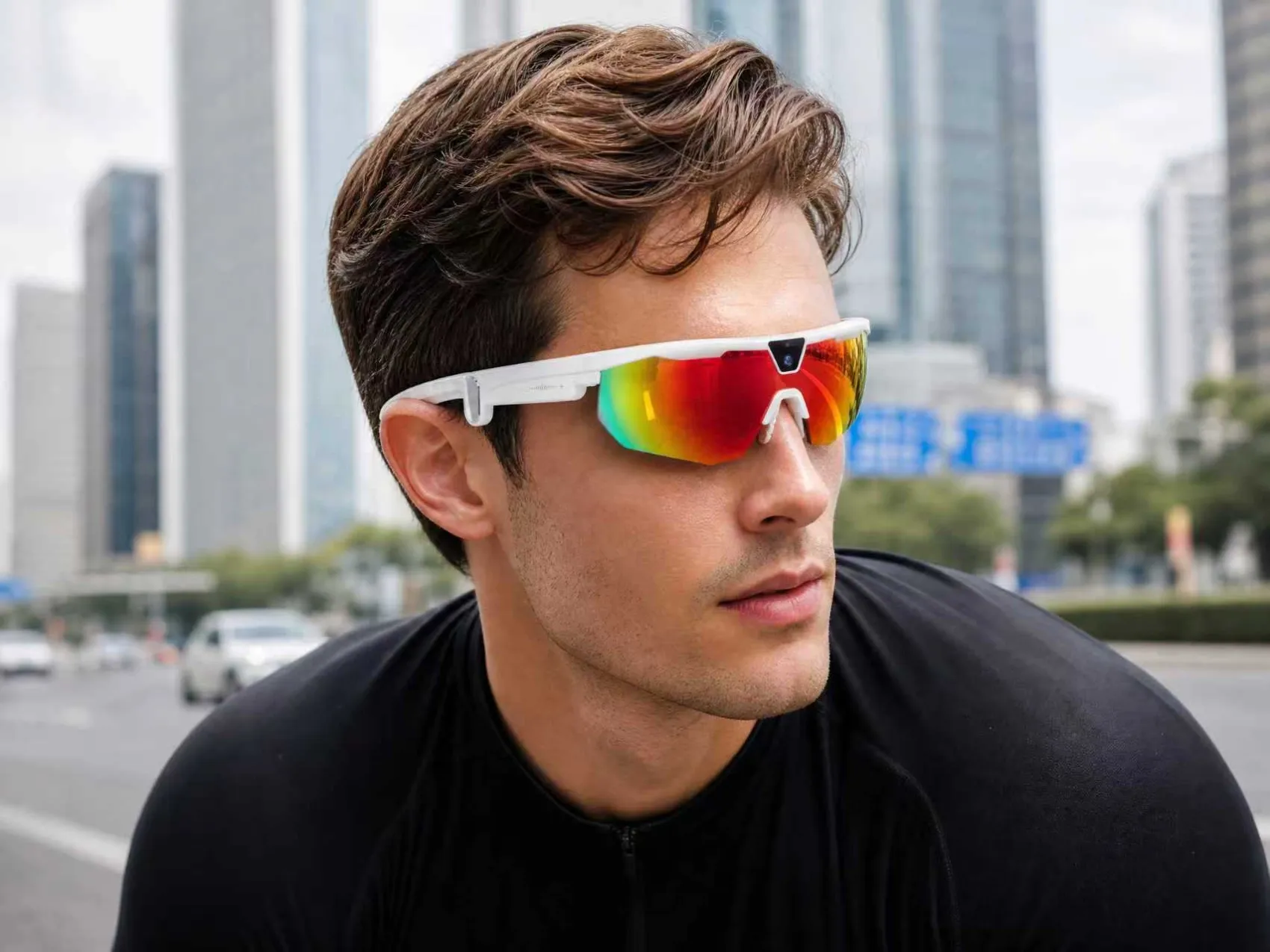
For example, the CA-27S uses a flexible TR90 frame and has a bare-frame weight of around 35g, while its design is rated IP66. This combination illustrates the engineering challenge of balancing environmental protection with the weight requirements of a wearable device.
Sealing Engineering: Where Reliability Is Built
Engineering Considerations
Achieving a higher IP rating often requires more than simply adding a gasket to the outer shell. Moisture can potentially enter through charging ports, microphone and speaker openings, buttons, seams, and other connection points.
Acoustic components present a particular challenge. Microphones and speakers need openings or acoustic pathways to function, but those same openings can become potential paths for water and dust. Depending on the design, manufacturers may use membranes, gaskets, adhesives, or other sealing structures to balance acoustic performance with environmental protection.
The charging interface and internal electronic compartments also require careful consideration. A reliable design needs to control the paths through which moisture could reach the PCB, battery, connectors, and other sensitive components.
Sealing methods should therefore be evaluated as part of the overall enclosure design rather than as a single manufacturing step.
Supplier Verification
The manufacturing process can also affect consistency. Manual sealing may introduce variations in adhesive quantity, position, or coverage if process controls are insufficient. More controlled dispensing and inspection processes can help maintain consistent sealing around critical areas.
In models such as the CA-27S, point-glue sealing is used around relevant internal connection and component areas to help reduce the risk of moisture entering sensitive electronics. The important sourcing question is not simply whether a supplier uses a particular sealing technique, but whether the process is repeatable and supported by appropriate testing.
How to Verify an IP Claim Before Ordering
An IP rating should be supported by documentation and testing rather than relying only on a supplier's product description.
1. Check the Test Report
Ask for the relevant IP test report and confirm that the tested model number matches the product being ordered. The report should identify the applicable test standard and the claimed IP rating.
It is also worth checking whether the report covers the complete finished product rather than only an individual component or enclosure.
2. Check the Testing Method
Different IP ratings correspond to different test conditions. An IP66 claim, for example, should be evaluated using the applicable dust and powerful-water-jet tests. It should not be interpreted as evidence of resistance to immersion.
This distinction matters when comparing products from different suppliers. Two products may both be described as “waterproof,” while their actual IP ratings and tested conditions are different.
3. Verify Function After Environmental Exposure
As an additional quality-control step, functional checks can be performed after the relevant environmental exposure test. For smart glasses, this can include checking Bluetooth connectivity, audio output, microphones, cameras, touch controls, and charging functions.
The test should match the claimed IP rating rather than using an arbitrary water-exposure method.
4. Ask About Critical Sealing Points
A supplier should be able to explain how the product handles areas that are naturally difficult to seal, including:
- Charging ports
- Microphone and speaker openings
- Buttons and touch-control areas
- Housing seams
- Battery and PCB compartments
- Internal cable or connector paths
The goal is not to judge a product by one sealing material or manufacturing technique. What matters is whether the complete design, process, and testing approach work together.
IP Ratings Are Only One Part of Outdoor Reliability
Ingress protection is useful, but it should not be treated as a complete durability assessment.
RoHS, for example, addresses restrictions on certain hazardous substances in electrical and electronic equipment. It does not define IP ratings or establish whether a device is resistant to water ingress.
Likewise, an IP66 rating demonstrates performance against specified dust and water-jet test conditions, but it does not automatically prove long-term resistance to sweat, corrosion, temperature changes, mechanical wear, or every other outdoor exposure.
For B2B sourcing, a more reliable evaluation combines the IP test report, enclosure design, sealing process, materials, and functional testing. This provides a clearer picture of whether a smart wearable is suited to the environment in which it will actually be used.