Aug 28, 2026News & Insights
Ergonomics in Smart Eyewear Sourcing: Vetting Temple Flex, Hinge Tension, and Materials

When sourcing smart glasses, it is easy to spend most of the time checking the camera, Bluetooth version, battery, or AI functions. Comfort is often checked much later, usually when the sample is already in hand.
That can be a problem. Smart glasses are worn directly on the face, and some users may wear them for several hours a day. A frame that feels comfortable for a few minutes may become uncomfortable after longer use. The hinge, temple arms, nose bridge, and overall weight are therefore worth checking during the sample stage.
Hinge Mechanics: Check How the Frame Actually Moves
The hinge is a small part of the frame, but it can have a noticeable effect on how the glasses feel.
A stiff hinge can make the temples press too tightly against the head. A hinge that is too loose can make the glasses feel unstable when the wearer moves. For smart glasses, there is another consideration: electronic components and wiring may run through the temples, so repeated movement of the frame can also put stress on the internal structure.
When checking a sample, buyers can simply open and close the temples several times and check whether the movement feels smooth and consistent. It is also useful to have people with different head sizes try the same frame. This can reveal problems that are not obvious from product drawings or specifications.
Temple Materials: Weight Is Only Part of the Question
The temple arms of smart glasses usually need to accommodate electronic components, so they cannot always be as slim as those of ordinary glasses.
Material selection therefore affects both durability and wearing comfort. PC is one option commonly used for lightweight electronic eyewear. Our CA-12C, for example, uses a PC frame and weighs about 54g without the charging case. We would not treat this number alone as proof of comfort, but it provides a useful starting point when comparing samples from different suppliers.
More importantly, check where the weight is distributed. Two pairs of glasses with similar total weights can feel quite different if one places more weight around the front frame or behind the ears.
Nose Bridge: Pay Attention During Longer Wear
The nose bridge is another part that is easy to overlook during a short product demonstration.
This becomes more noticeable with camera-equipped glasses, where the front frame contains additional hardware. If the weight is not distributed well, the glasses may gradually slide down the nose or create pressure in one small area.
A practical sample test does not need complicated equipment. Wear the glasses for a longer period and check whether they remain in position. Look for pressure marks on the nose and discomfort around the bridge. If the product will eventually use prescription lenses, the test should also consider the additional weight of the final lens configuration.
Adjustable or softer nose pads can be helpful here, particularly when the product is intended for users with different facial shapes.
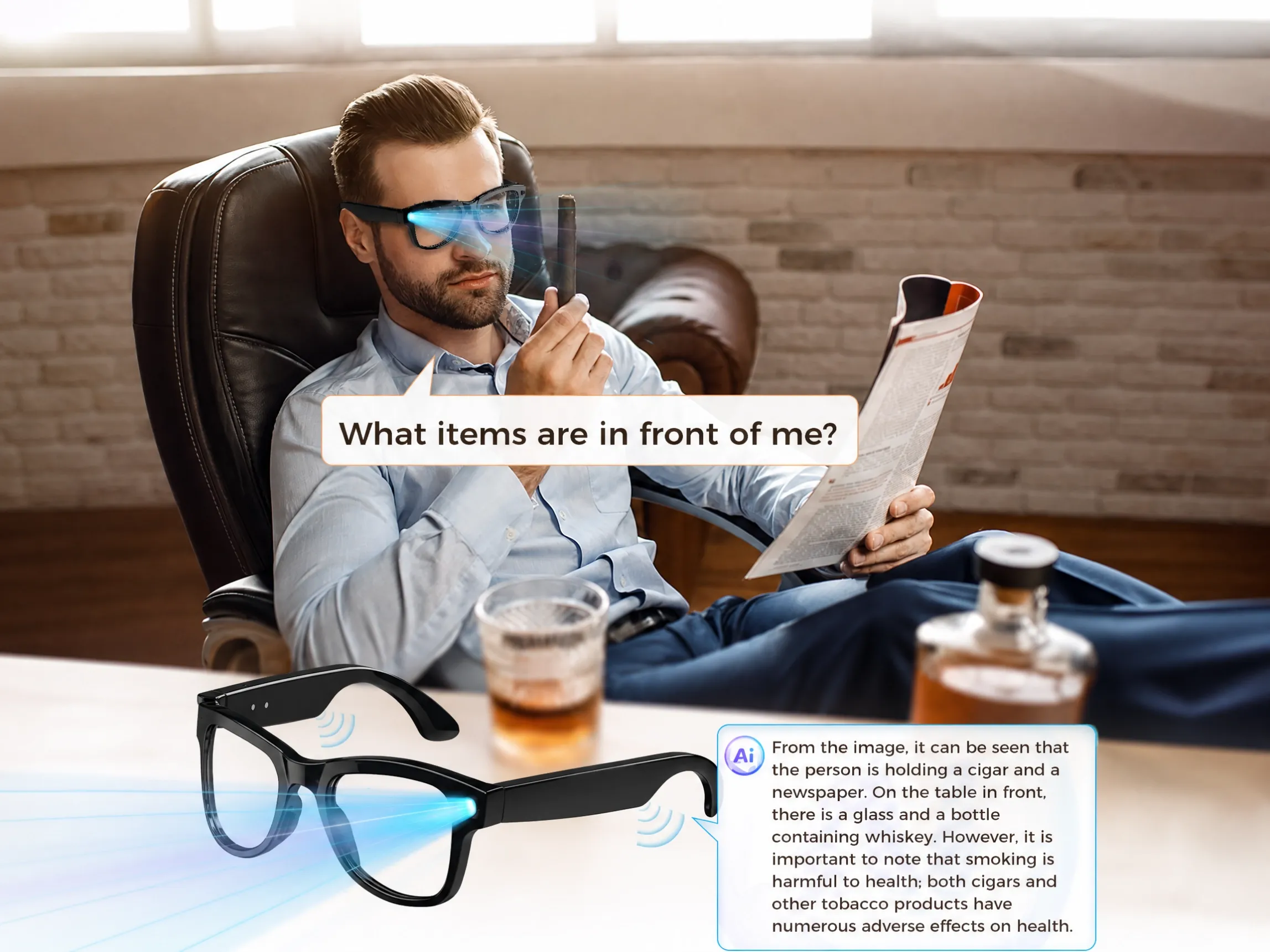
How We Check Ergonomics During Sample Evaluation
Comfort is difficult to judge from a specification sheet. It is better to include it in the sample-checking process.
For a smart glasses sample, the basic checks can include:
· Temple and hinge: Check the opening resistance, flexibility, and whether the hinge feels consistent on both sides.
· Frame fit: Have different users wear the sample instead of relying on one tester.
· Weight distribution: Check whether the frame feels front-heavy or puts too much pressure behind the ears.
· Nose bridge: Wear the glasses for a longer period and check for slipping or pressure marks.
· Material: Confirm the actual frame material against the supplier's specification and available test documentation.
These checks are fairly simple, but they can save a lot of trouble later. A smart glasses sample may work perfectly from a technical perspective and still be unsuitable for long-term use if the frame is uncomfortable.
If you are sourcing smart glasses for your market, we can help you evaluate suitable models based on frame design, wearing comfort, functionality, and customization requirements. Contact us to discuss your smart glasses sourcing requirements and find a model that fits your target market.