Sep 1, 2026News & Insights
Smart Toy Data Privacy: Sourcing AI Companions with Secure Parental Terminals
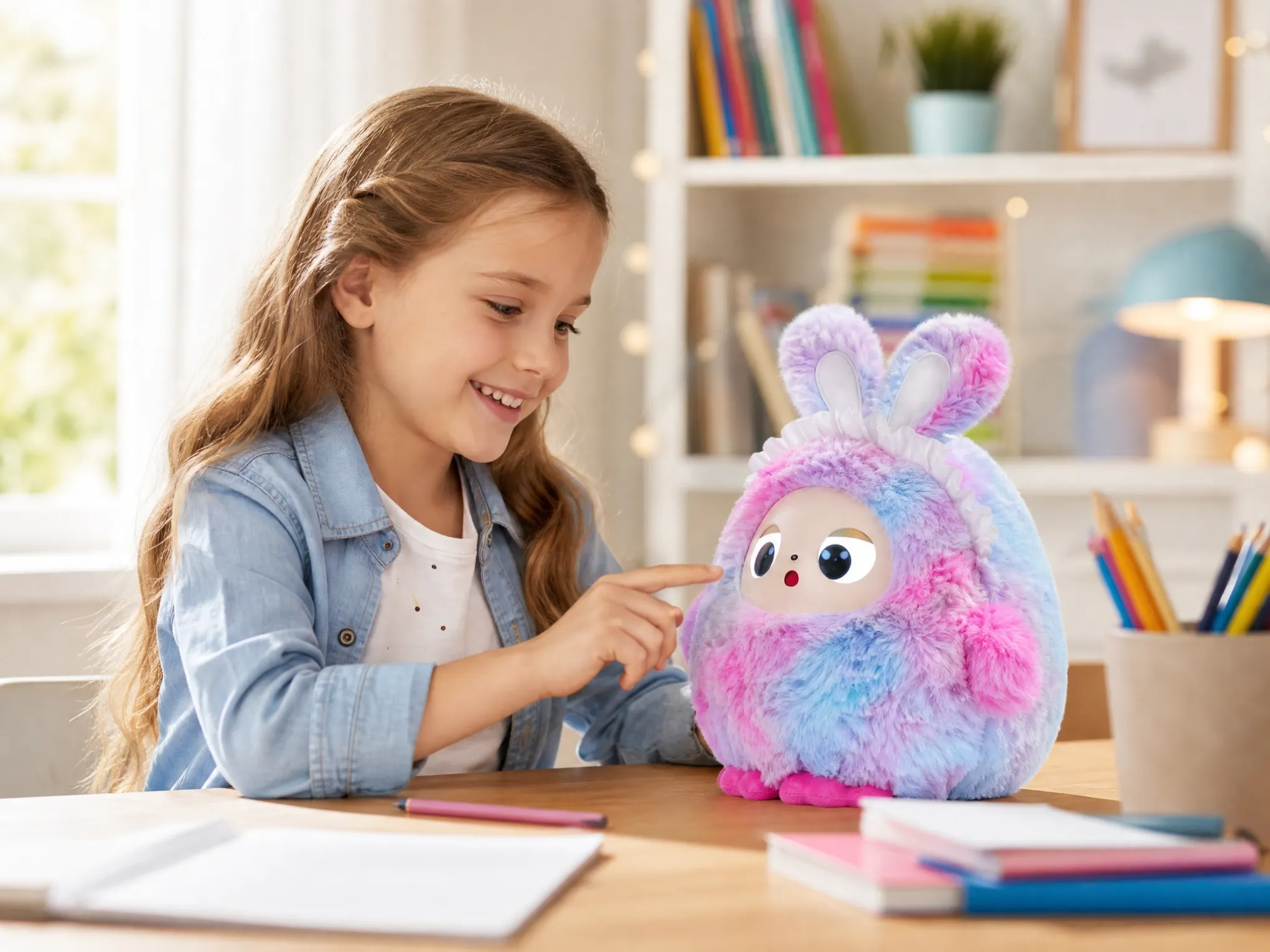
Sourcing connected AI toys requires more than checking whether a product can recognize voices, remember conversations, or respond naturally. Once a toy collects information from a child, the way that data moves between the toy, mobile application, and cloud services becomes an important part of supplier evaluation.
For B2B buyers, understanding this data flow before placing a bulk order can help identify privacy risks early and clarify the responsibilities of the importer, brand owner, and technology provider.
Hardware Level Data Pathways: Where Does Children's Data Go?
For an AI companion toy, a typical interaction may involve several stages. The toy captures a voice input, processes or transmits the data, the companion application communicates with a cloud service, and the AI response is eventually returned to the toy.
The important question for buyers is not simply whether the toy uses WiFi or Bluetooth. It is what information is collected, where it is processed, what is stored, and what information is transmitted outside the device.
In the United States, COPPA can apply to internet connected toys and services that collect personal information from children. The FTC specifically recognizes audio recordings containing a child's voice as personal information under COPPA, subject to certain exceptions and conditions.
In the European Union, children's personal data receives additional protection under the GDPR. Requirements can include parental consent depending on the legal basis, the child's age, and the applicable Member State rules.
This makes the supplier's data architecture an important part of the sourcing process. Buyers should ask suppliers to clearly document which functions operate locally and which depend on cloud services.
Local Processing vs Cloud AI
Not every piece of information generated during an AI interaction necessarily needs to be sent to a remote server.
Some smart toy architectures can process certain inputs locally before sending information to an external AI service. Where appropriate, this can reduce the amount of raw data transmitted and give developers more control over what leaves the device.
For B2B buyers, the key point is to understand the actual implementation rather than simply accepting terms such as AI powered or privacy focused.
Ask the supplier:
• Is the voice input processed locally or sent directly to the cloud?
• Are raw voice recordings stored?
• Are conversation transcripts retained?
• What information is sent to the AI model?
• Which data is stored on the toy, mobile application, or cloud server?
• How long is the information retained?
• Can stored information be deleted?
If a product can perform part of its processing locally and transmit only the information necessary for a particular AI function, this may reduce unnecessary exposure of children's personal data. However, local processing alone does not guarantee compliance or privacy. The supplier should be able to explain exactly how the system works.
Parental Controls and Data Management
Parental controls are another important part of connected toy design.
UNICEF's current Guidance on AI and Children emphasizes children's safety, privacy, transparency, accountability, and the protection of children's data. Its latest guidance also specifically addresses AI companions and the AI supply chain.
A parental application should therefore be evaluated as part of the product itself, rather than treated as a separate piece of software.
Depending on the product's functions, useful controls may include the ability for caregivers to:
• Understand when AI services are being used
• Review relevant account or interaction information
• Manage connected devices and user permissions
• Delete stored personal information where applicable
• Understand what information is transmitted to external services
The exact functions will vary by product and market. What matters during sourcing is whether the supplier can clearly explain the data lifecycle and provide practical controls for caregivers.

Cybersecurity: Look Beyond the Toy Hardware
Data privacy is not limited to the physical toy. The companion application, cloud services, APIs, and firmware update system all form part of the same connected product.
A supplier should therefore be able to explain how information is protected while it moves between the toy, mobile application, and cloud infrastructure. Buyers should also ask how firmware updates are authenticated and how security vulnerabilities can be addressed after products have entered the market.
Rather than asking only whether a supplier uses secure encryption, procurement teams should request supporting documentation and clarify:
• How is data protected during transmission?
• How is stored information protected?
• Who can access the collected data?
• Where are cloud services hosted?
• How are software and firmware updates authenticated?
• What happens if a security vulnerability is discovered after shipment?
These questions are particularly important for private label products because the brand owner may have responsibilities for how the product is presented and operated in its target market, even when some technical infrastructure is provided by a third party.
A Practical Privacy Checklist for AI Toy Sourcing
Before approving an AI companion toy for mass production, buyers can use a simple data flow review:
1. Map the data flow
Identify what information is collected by the toy and where it goes afterward.
2. Separate local and cloud processing
Ask which functions can operate locally and which require an external AI service.
3. Review the parental application
Check whether caregivers have understandable controls for account management, permissions, and personal data.
4. Confirm retention and deletion
Ask what information is stored, how long it remains available, and how deletion requests are handled.
5. Review the security architecture
Request documentation covering communication security, access control, firmware updates, and relevant security testing.
6. Match the system to the target market
Privacy requirements can differ between jurisdictions, so the same AI toy configuration should not automatically be assumed to be suitable for every market.
For connected AI toys, privacy should be evaluated as part of the complete product architecture rather than as a feature added at the end of development. A supplier that can clearly explain the path from a child's interaction to the final AI response gives B2B buyers a much stronger basis for assessing technical, privacy, and compliance risks.
Looking for an AI companion toy with transparent data handling and practical parental controls? Share your target market and product requirements with us, and we can help you evaluate suitable product options and customization possibilities.