Sep 29, 2026News & Insights
Bespoke Plush Manufacturing: Engineering Tactile Sensation and Custom Forms from Sketch to Sample
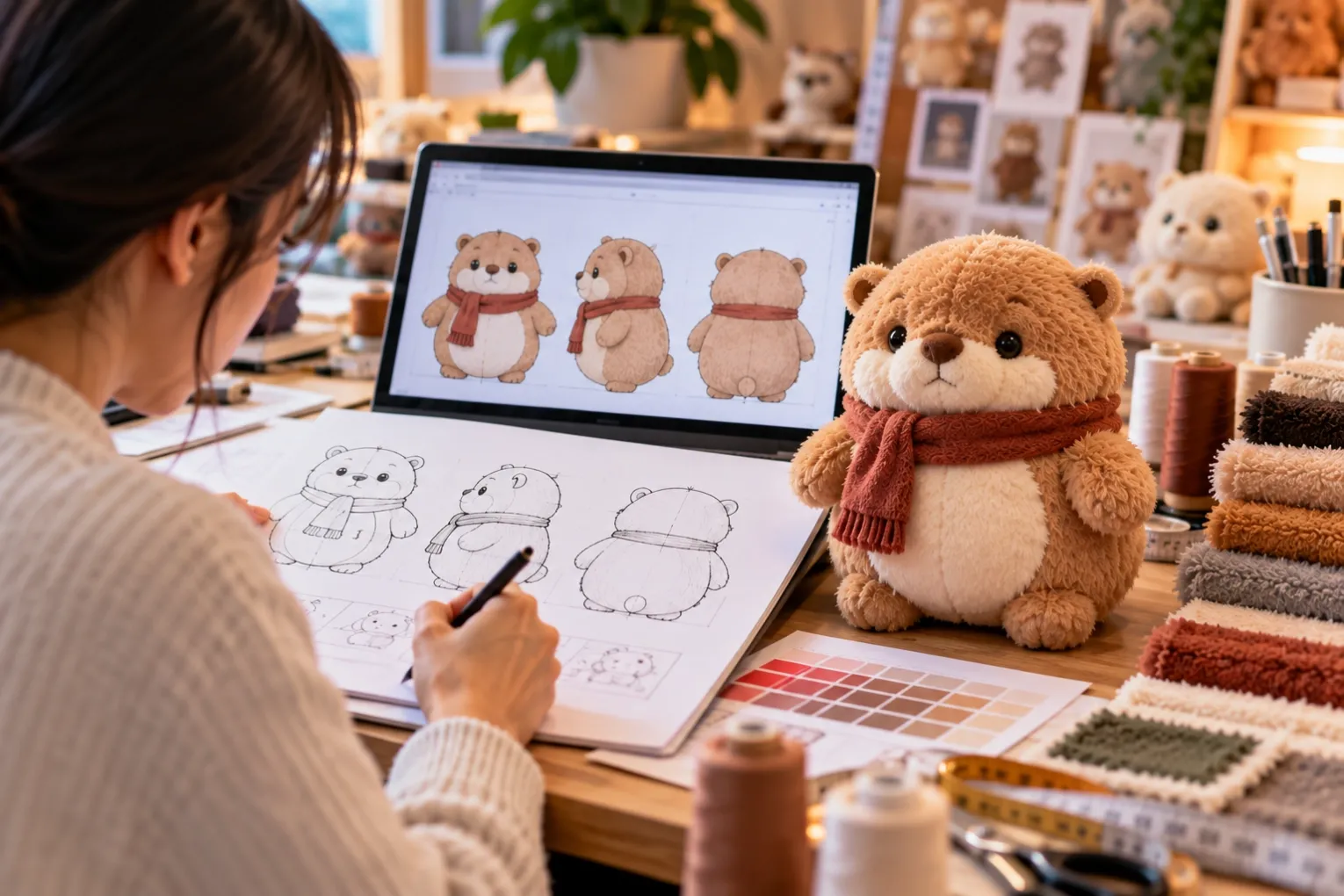
For many plush products, the first physical impression can strongly influence how consumers perceive the character and overall product quality. Two important factors are the visual silhouette and tactile hand-feel. A flat, two-dimensional character sketch may communicate the creative concept, but turning that artwork into a three-dimensional plush product requires careful consideration of fabric stretch, pile direction, filling, pattern construction, and proportions.
For brand owners and designers, custom plush toy manufacturing is therefore more than reproducing an illustration in fabric. The material, pattern, and construction need to work together to preserve the intended character while creating the desired physical feel. Our custom manufacturing service supports appearance development from initial design references through material selection, pattern making, prototyping, and production coordination.
The Logic of Form and Fabric: Pairing Silhouettes with the Right Materials
A successful custom plush toy begins with selecting materials that are appropriate for the character's shape. Fabric is not simply a decorative outer layer. Its stretch, weight, pile, and structure can affect how the filling is distributed and how the finished toy holds its shape. Fabric selection should therefore consider both the desired appearance and the practical requirements of the design (2027-07-22 Wehaoplush, Plush toy fabric guide).
Different character forms may require different material approaches:
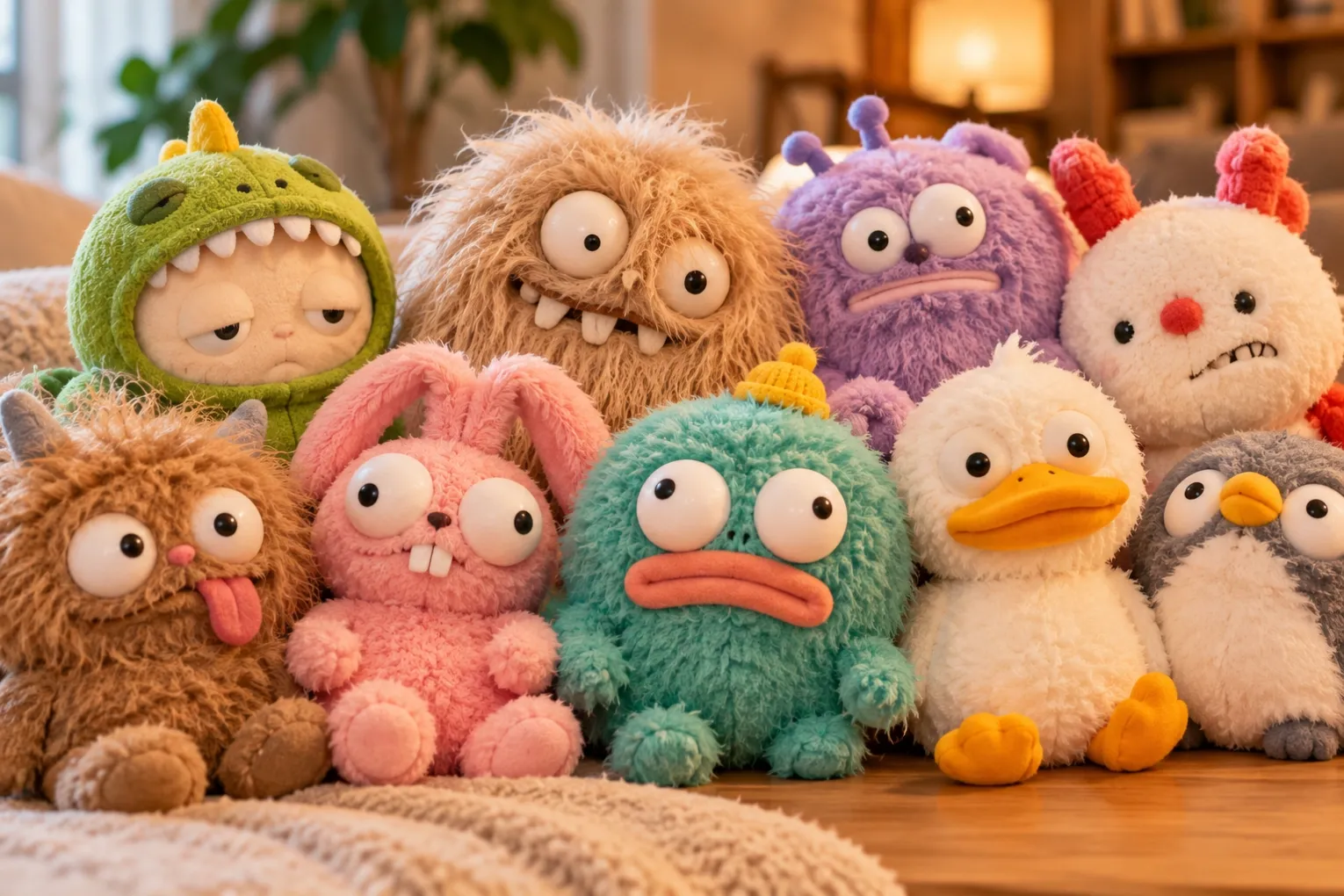
Soft, Rounded, and Squeezable Shapes: Characters designed to feel soft, plump, or pillow-like can benefit from fabrics with a suitable degree of stretch, such as stretch velvet or elastic knit materials. Combined with suitable polyester or PP cotton filling, these fabrics can help create a soft hand-feel while supporting the intended shape. The final result depends on the fabric construction, pattern, and filling density.
Structured, Upright, and Stylized Characters: Standing mascots, geometric forms, or figures with defined limbs generally require materials and construction methods that provide sufficient dimensional stability. Low-stretch woven fabrics, textured twill, corduroy, or stabilized velour may help maintain cleaner edges and more defined forms when combined with an appropriate pattern and filling structure.
Vintage, Artisanal, and Quirky Characters: Characters intended to convey warmth, nostalgia, or an unconventional personality can benefit from textured materials such as bouclé, Sherpa, or curly Teddy fleece. Their looped or curly surfaces create more pronounced texture, adding visual depth and a distinctive hand-feel to the finished character.
We support custom pattern development for different character silhouettes, taking fabric behavior, seam placement, proportions, and construction requirements into account. The goal is to ensure that the physical prototype remains visually consistent with the original 2D artwork while functioning as a practical three-dimensional product.
Engineering the Tactile Experience: Hand-Feel and Visual Depth
Tactile sensation is another important part of custom plush design. Depending on the intended character and market positioning, a product may need to feel silky and smooth, soft and squeezable, or more textured and substantial.
Material selection can be influenced by factors such as pile length, fiber density, fabric weight, stretch, and surface texture. Different materials can also serve different parts of the same character.
Short-Pile Minky / Crystal Velvet: Short-pile fabrics provide a relatively smooth surface and are commonly used for plush bodies, facial areas, and other sections requiring a clean surface. Their relatively even texture can also provide a suitable base for embroidery and certain printed graphics, depending on the fabric construction and decoration method.
Long-Pile Faux Fur: Longer-pile fabrics can add volume and movement to features such as animal manes, tails, ears, or other decorative elements. Pattern direction and cutting layout need to be considered carefully because the nap can affect the appearance of the finished character.
Mixed-Media Fabric Splicing: Custom plush products do not always need to use one material throughout the entire body. A design may combine a textured bouclé body with smooth minky facial panels and corduroy paws, for example. Using contrasting materials can create clearer visual and tactile differences between different parts of the character while supporting the intended design language.
For custom color development, Pantone references can also be used as a starting point for material selection or fabric color development. The closest match depends on the chosen material, dyeing process, and production conditions. Because the same color reference can appear differently across materials, physical swatches and sample approval are useful steps before production.
From Sketch to Sample: Our Bespoke Appearance Prototyping Pipeline
Turning an original character into a physical plush product requires more than simply converting a drawing into pattern pieces. A structured development process helps identify proportion, material, and construction issues before mass production.
Our custom plush development process can include:
Design Analysis and Tactile Consultation: We review 2D illustrations, vector turnarounds, reference images, or other design materials to understand the intended proportions, appearance, and hand-feel. Based on the character design, we can recommend suitable fabric and filling combinations.
Material Curation and Swatch Selection: We help compare fabrics with different pile heights, textures, stretch characteristics, and weights. Physical swatches can be reviewed before the selected material is incorporated into the prototype.
Pattern Making and First Prototype: Pattern makers develop the initial three-dimensional pattern pieces and produce a first prototype to evaluate volume, proportions, symmetry, posture, and overall character shape.
Detailing, Embroidery, and Sample Finalization: Once the basic form is confirmed, details such as facial embroidery, printed elements, labels, or other decorative components can be incorporated into the sample for formal review.
Flexible Trial-Order Support: For new custom plush projects, trial orders can allow brands to evaluate market response before committing to larger production volumes. Depending on the design, materials, customization requirements, and production process, we can discuss suitable trial-order quantities and scaling options.
By combining material selection, pattern development, prototyping, and production coordination, custom plush toy manufacturing can turn an original character concept into a physical product that is consistent in both appearance and tactile experience.
For brand owners and designers, the objective is not simply to make a plush toy that looks like the original artwork. It is to determine how the character should feel, how its materials should support its form, and how the design can be reproduced consistently from the first sample to production.