Sep 28, 2026News & Insights
Selling Emotional Solace: Why Modern Consumers Prefer 'Ugly-Cute' Plush Companions
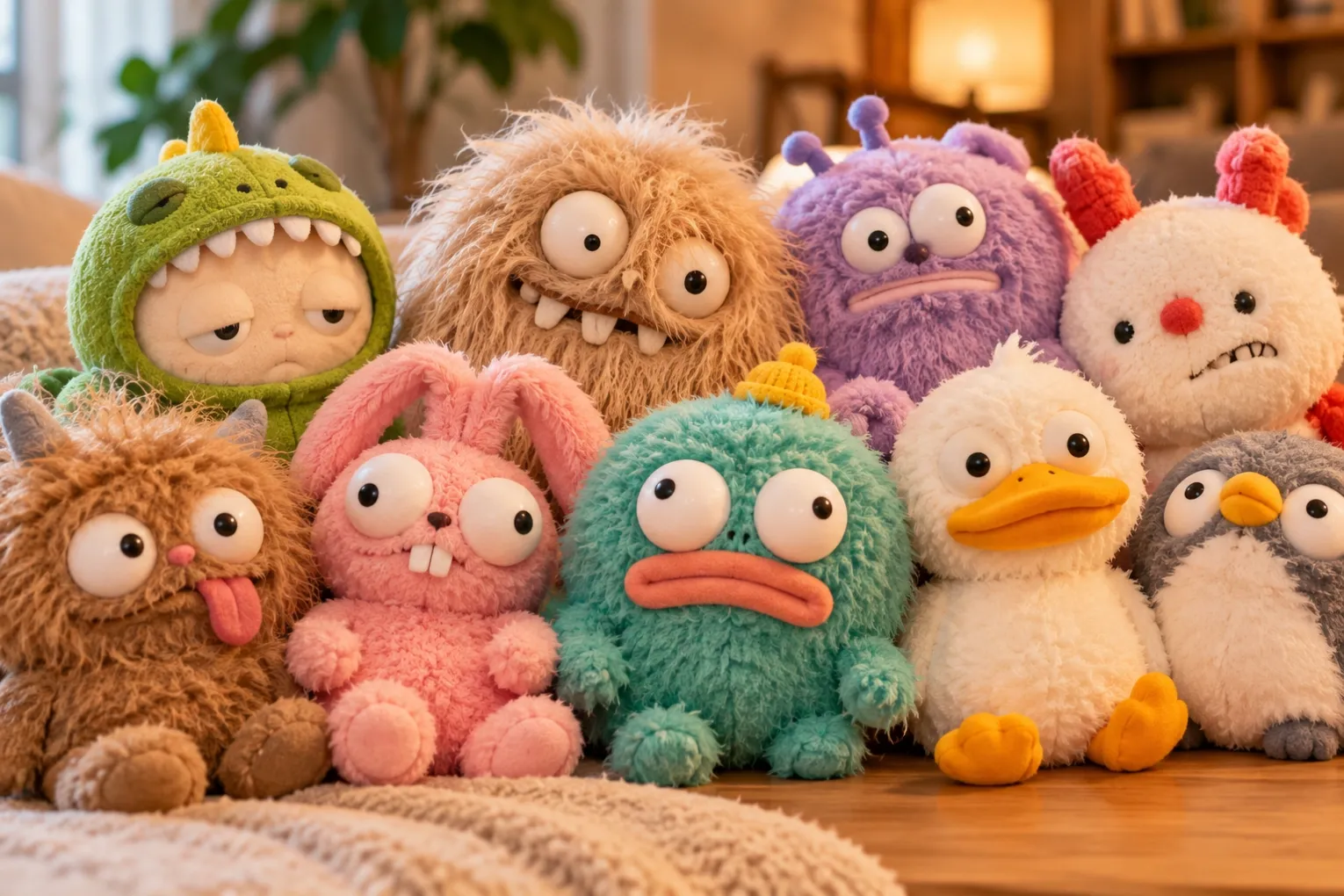
In consumer retail, product appeal is not always about technical sophistication or traditional aesthetics. Some plush toys attract buyers precisely because they look unusual, funny, or intentionally imperfect. Mismatched eyes, exaggerated expressions, and quirky character designs can make a product more memorable and give consumers an easy reason to share or gift it. This creates an alternative approach to differentiation within the ugly-cute plush toy trend.
Rather than competing primarily through conventional character designs, brands can use humor, personality, and visual distinctiveness to create products that stand out in crowded retail and online channels.
For B2B buyers, however, a distinctive appearance is only the starting point. Commercial potential still depends on pricing, product quality, safety, and sourcing flexibility.
The Psychology of the "Gimmick": Low Friction, High Amusement
Consumer Behavior & The Entertainment Factor
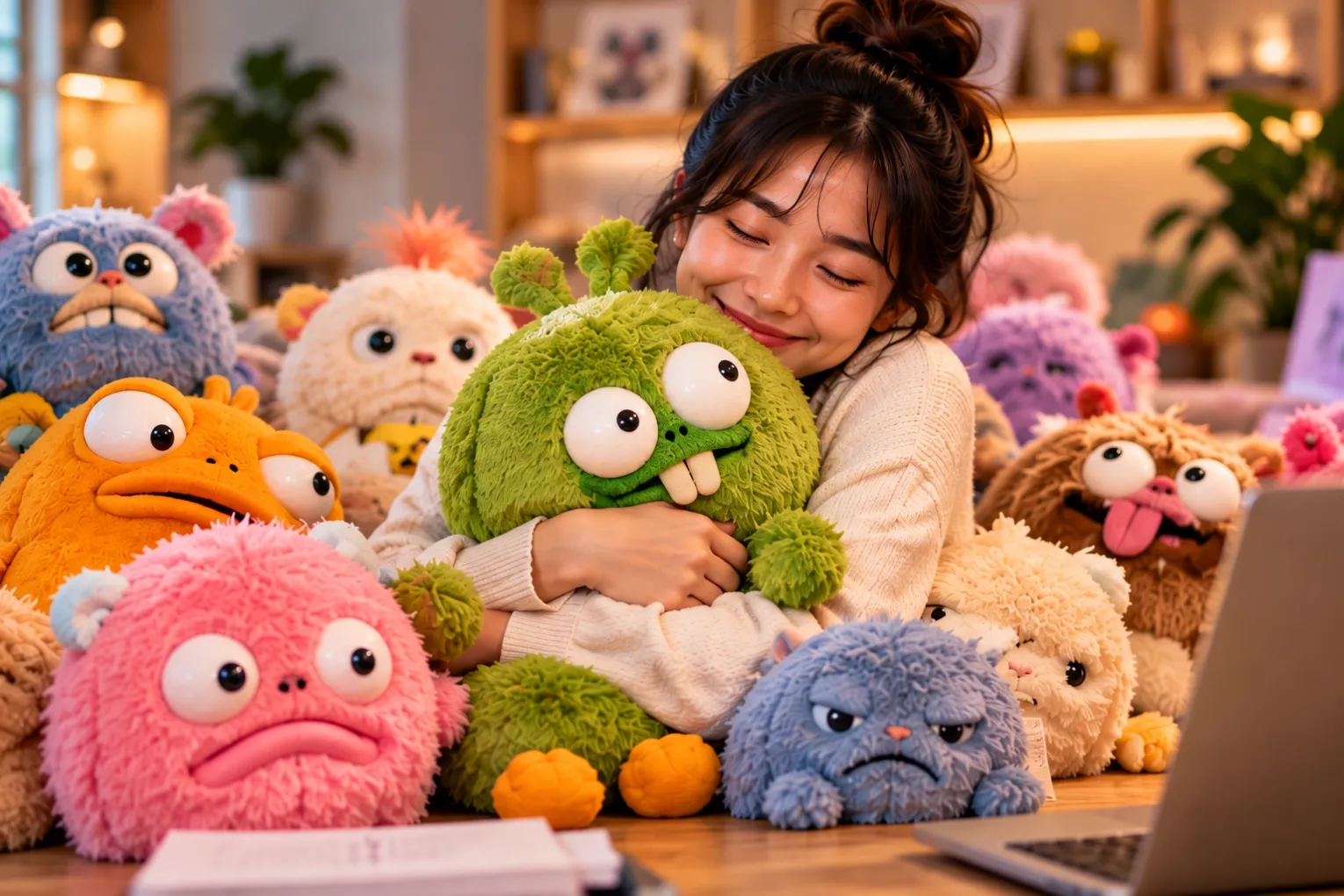
Part of the appeal of an unconventional plush toy is its ability to communicate a simple idea quickly: it is funny, unusual, or visually memorable. Consumers may purchase these products as desk decorations, conversation starters, novelty gifts, or playful additions to their personal spaces.
This type of product does not necessarily need to solve a practical problem. Its value can come from character and entertainment.
A deliberately awkward expression or unconventional shape can also make a plush toy easier to recognize in social media posts, product photos, and short-form videos. For retailers, this creates another way to build product differentiation. Instead of relying solely on traditional cute designs, brands can experiment with characters that have stronger personalities or a more distinctive visual identity.
B2B Commercial Reality: Differentiation Through Character
For procurement teams and distributors targeting the kidult plush toy market, novelty can be commercially useful when it gives a product a clear identity. Products designed around recognizable characters, humorous expressions, or unusual concepts may fit lifestyle stores, gift shops, online novelty categories, and other retail environments where visual appeal influences purchasing decisions.
However, novelty alone does not guarantee strong sales. A product that attracts attention but has an unsuitable price, weak quality, or limited repeat appeal can still create inventory risk. Buyers therefore need to evaluate the complete product proposition rather than treating an unusual design as a substitute for sound sourcing fundamentals.
Sourcing the "Fun Factor": Avoiding the Gimmick Return Trap
The Technical Bottleneck of Cheap Novelties
Consumers may initially purchase a plush companion because it looks entertaining, but poor quality can quickly undermine that appeal. This is particularly important for interactive plush toys that combine soft materials with speakers, buttons, batteries, motors, or other electronic components.
Common failure points can include unreliable buttons, distorted audio, charging problems, weak stitching, damaged decorative elements, or premature battery degradation. When these issues appear after the product reaches consumers, the original novelty can become a source of complaints, returns, and additional after-sales costs.
Sourcing teams should therefore evaluate the internal construction as carefully as the exterior design. Sample testing should cover both the plush structure and the electronic functions that consumers will use repeatedly.
Sourcing Playbook: How Retailers Commercialize Quirky Companions
Commercial Guardrails & Sourcing Checklist
To turn an entertaining plush concept into a commercially viable product, procurement managers can focus on three practical areas:
Build the Product Around a Realistic Price Position: Instead of treating a fixed retail price as a universal impulse threshold, buyers should work backward from their target market, channel margins, logistics costs, and product positioning. The goal is to ensure that the product remains commercially attractive after landed costs and retail expenses are considered.
Verify Physical Safety and Battery Requirements: Plush toys and interactive products may be subject to different safety and compliance requirements depending on the destination market and product design. For the US and EU, buyers should identify the applicable toy-safety, material, electrical, radio, and battery requirements before production. For products containing lithium batteries, suppliers should also provide appropriate test documentation and transport-compliance evidence, including applicable UN 38.3 documentation where relevant.
Maintain Agile OEM/ODM Partnerships: Because novelty-driven products can change quickly with consumer trends, flexible sourcing can reduce the risk of committing too much inventory too early. Suppliers with existing electronic platforms and adaptable plush designs may allow brands to test different character concepts, exterior designs, logos, or packaging through smaller trial orders before moving toward larger-scale customization.
The key is to treat the "ugly-cute" concept as a product differentiation strategy, not as a guarantee of consumer demand. A distinctive character can help a plush toy attract attention, but successful commercialization still requires the right combination of design, cost, quality, compliance, and supply-chain flexibility.
For B2B buyers, this approach creates room to experiment with unconventional products while keeping sourcing decisions grounded in measurable commercial and operational factors.