Jun 26, 2026News & Insights
Why Screen-Free AI Glasses are the Healthier Choice for Your Eyes
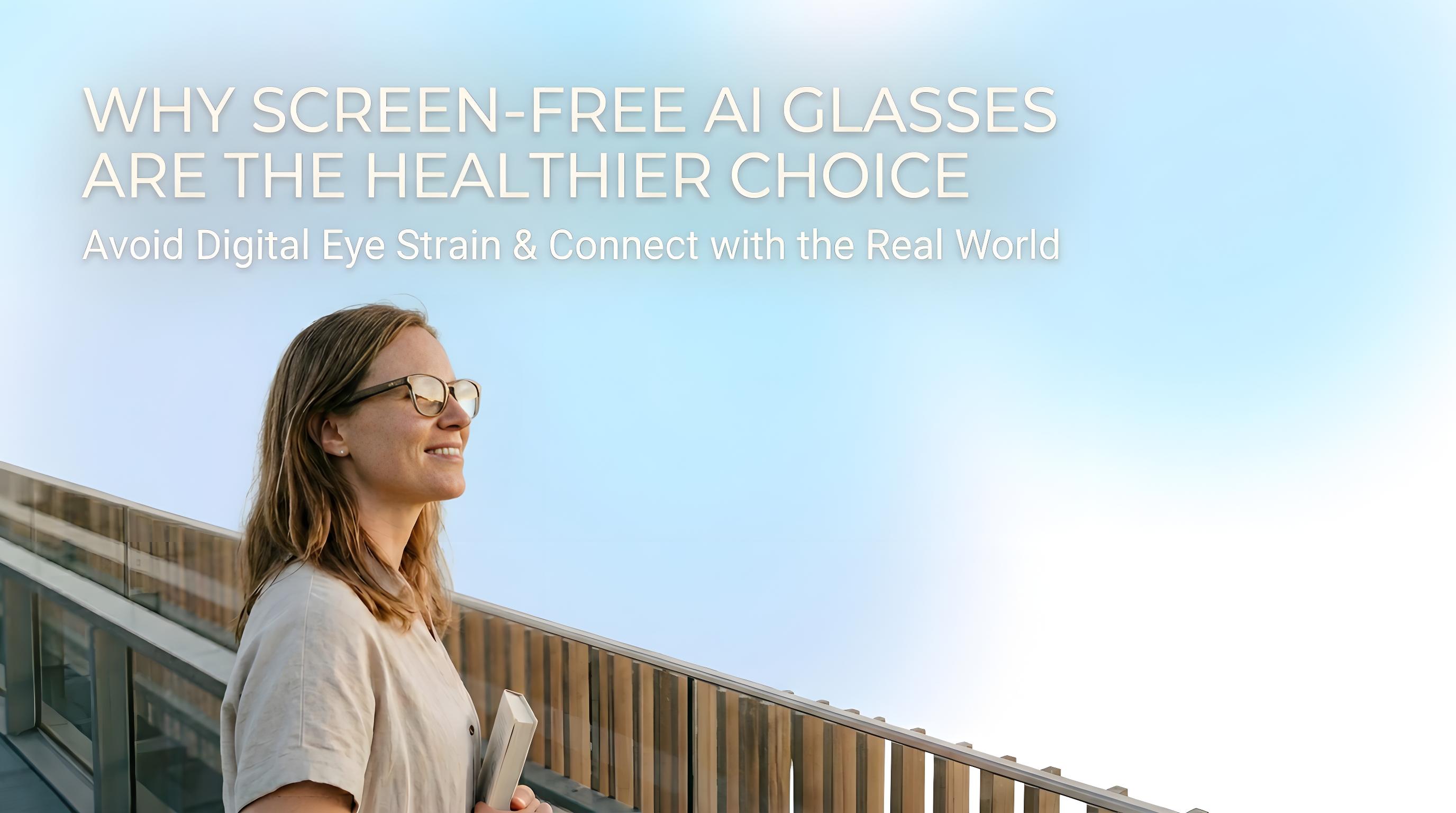
We’ve all been there: after eight hours of staring at a laptop, your eyes feel "heavy," your vision is a bit blurry, and a dull headache starts to kick in. This is Digital Eye Strain, and as we move toward wearable tech, many people worry that putting a screen even closer to their eyes will only make it worse.
At Shenzhen Penease Micro Technology, we’ve taken a different approach. By focusing on screen-free AI glasses rather than Augmented Reality (AR) headsets, we’re prioritizing long-term vision health. Here is why "less is more" when it comes to your eyes.
The Problem with "Floating Screens"
Most AR glasses function by projecting a digital image directly onto your lenses. This causes a "Vergence Accommodation Conflict." In simple terms, your brain gets confused: your eyes are physically focusing on a lens just centimeters away, but they are trying to "look through" it at a digital image that appears to be further off.
This constant tug-of-war for your eye muscles is a leading cause of the dizziness and fatigue associated with high-tech headsets.
The Power of the "4-Meter Rule"
Our AI glasses are designed to keep you engaged with the real world, not a virtual one. We advocate for the 4-Meter Rule: for optimal eye health, your primary focus should be on objects at least 4 meters away as often as possible.
Because our glasses use audio-first AI and voice interactions rather than a blocking digital display:
- Natural Blinking: You blink naturally because you aren't "staring" at a fixed light source.
- Distance Vision: You keep your focus on your surroundings—whether you're walking in a park or sitting in a meeting—allowing your eye muscles to stay relaxed.
- Reduced Blue Light: Since there is no glowing screen, you are reducing a major cause of artificial blue light, which can cause problems in sleeping and irritation.
Simple Tech, Better Comfort
By removing the heavy batteries and optical engines needed for AR displays, we’ve made our glasses significantly lighter. This eliminates the "nose-bridge pressure" that often leads to tension headaches.
The Bottom Line: You do not need a screen in front of your face to stay connected. With AI glasses, you get the help of a smart assistant while giving your eyes the "screen break" they truly deserve.